


Chalkola Chalkboard & Whiteboard Cleaning Kit: Natural, Non-Toxic
Chalkola's chalkboard cleaning system — natural cleaner, magnetic eraser, microfiber cloth. How to keep your non-porous chalkboard ghost-free for years.
What's in Chalkola's cleaning kit
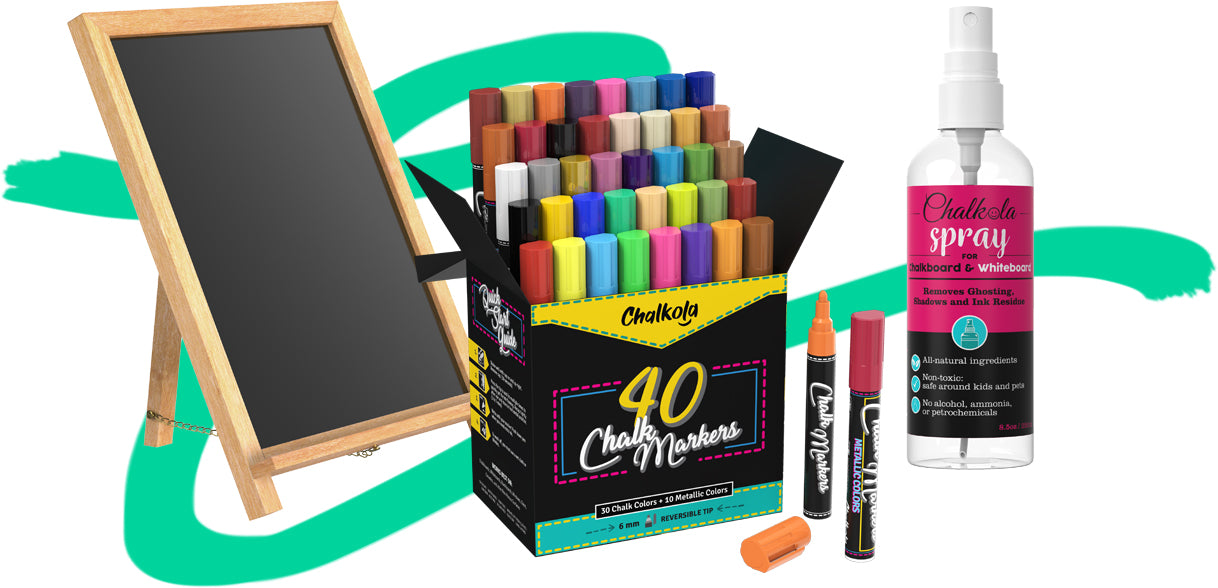
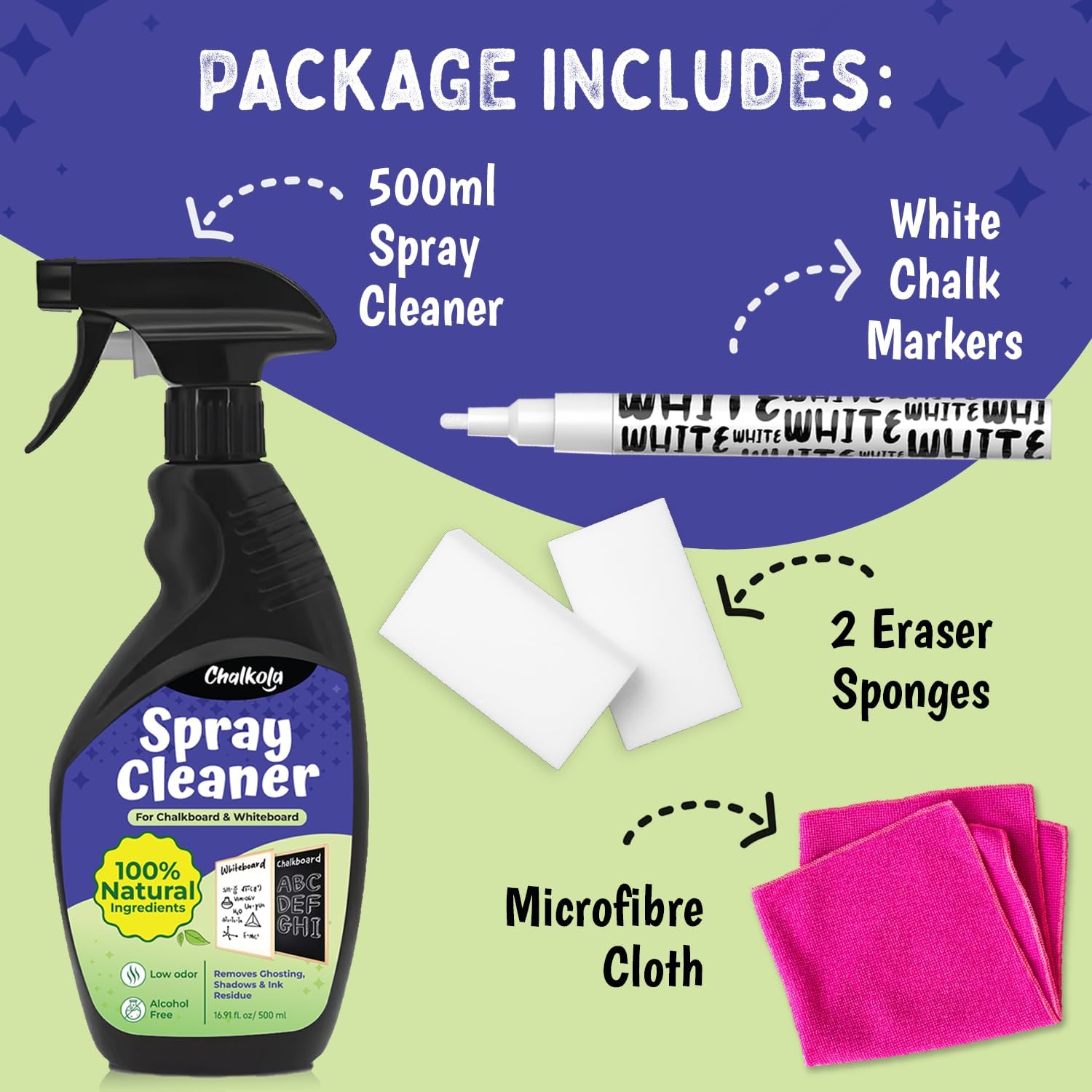
Chalkola's Chalkboard & Whiteboard Cleaner Kit ($19.95) is a 3-piece system designed specifically for non-porous chalkboards, whiteboards, and glass surfaces where chalk or dry-erase markers are used.
- Natural cleaner spray (16 oz) — non-toxic, food-safe, pH-neutral. Removes ghosting and accumulated pigment residue on non-porous chalkboards, whiteboards, and glass. Free from harsh chemicals like ammonia or bleach.
- Magnetic eraser — dual-sided felt eraser with an embedded magnet in the back. Stores directly on any magnetic-back chalkboard so it's always within reach.
- Microfiber cloth — lint-free, reusable, machine-washable. For streak-free final drying after the cleaner spray.
Why you need a dedicated chalkboard cleaner
After months of heavy chalk marker use, even well-maintained non-porous chalkboards develop ghosting — a faint residue layer of old pigment that sits on top of the coating. This residue doesn't come off with plain water.
Dedicated chalkboard cleaners are formulated to dissolve this residue without damaging the surface coating. Using the wrong cleaner (like Windex, 409, or rubbing alcohol) on a non-porous chalkboard over time strips or dulls the surface, eventually exposing porous substrate underneath. Once that happens, ghosting becomes permanent.
Chalkola's cleaner uses plant-derived surfactants that lift pigment without attacking the acrylic, melamine, or glass coating. Safe for use on the same chalkboard for years without damage.
Proper cleaning technique (5 steps)
- Erase everything first with the magnetic eraser (felt side) — this removes the bulk of marker residue before the cleaner touches the surface.
- Spray the cleaner lightly on the board. Don't soak it — a thin mist (4-6 sprays for a 24×36 board) is enough. Over-spraying can pool in frame seams.
- Wipe with the microfiber cloth in horizontal strokes. Work in sections from top to bottom so drips don't contaminate already-cleaned areas.
- Let it air dry for 1–2 minutes. Don't use the board until fully dry — writing on a wet surface smudges.
- Check for streaks — polish with a dry microfiber if needed. Should look pristine at this point.
How often should I clean a chalkboard?
- After every message change (daily specials, weekly menus): quick dry erase with the magnetic eraser only.
- Weekly deep clean for heavy-use kitchen, café, or restaurant boards: cleaner spray + microfiber.
- Monthly for light-use boards (home decor, office, family calendar): full wipe-down to prevent residue buildup.
- Once a year: full cleaning + inspection for any coating wear at corners and edges.
Heavier use (café daily specials, school classrooms) means more frequent deep cleans. Lighter use (weekly quote change, monthly calendar) can stretch to monthly cleaning without ghosting.
What NOT to use on a chalkboard
Common household cleaners that seem convenient but damage chalkboards over time:
- Windex — contains ammonia, which strips non-porous coatings. Works briefly but the surface degrades faster.
- Rubbing alcohol — dissolves some acrylic coatings. Fine for a rare deep clean but damages the surface with regular use.
- Bleach or bleach-based cleaners — too harsh, discolors painted chalkboard frames and dulls surfaces.
- Abrasive scrubbers (sponge rough side, steel wool, Magic Eraser) — physically scratch non-porous coatings, creating micro-grooves that cause future ghosting.
- Cooking oil (suggested in some DIY guides) — leaves a film that attracts dust and makes markers bead up.
Stick with water, dedicated chalkboard cleaners, or very diluted white vinegar (1:4 with water) as safe alternatives.
Works on more than just chalkboards
The same kit cleans:
- Whiteboards — removes dry-erase marker ghosting, ink buildup, and permanent-marker mistakes (if used within 24 hours)
- Glass fridges and windows where you've used chalk markers for holiday messages or seasonal decoration
- Mirrors with accumulated cleaner residue, toothpaste spatter, and hard-water spots
- Stainless steel fingerprints and smudges (the cleaner is gentle enough for kitchen appliances)
- Laminate surfaces like kitchen counters and office desks
Two Chalkola cleaner kit sizes — over 2,050 reviews · 4.4★ avg
Both cleaners use 100% natural ingredients — safe for food-contact surfaces, classrooms, and homes with kids. Free Prime shipping across the USA.
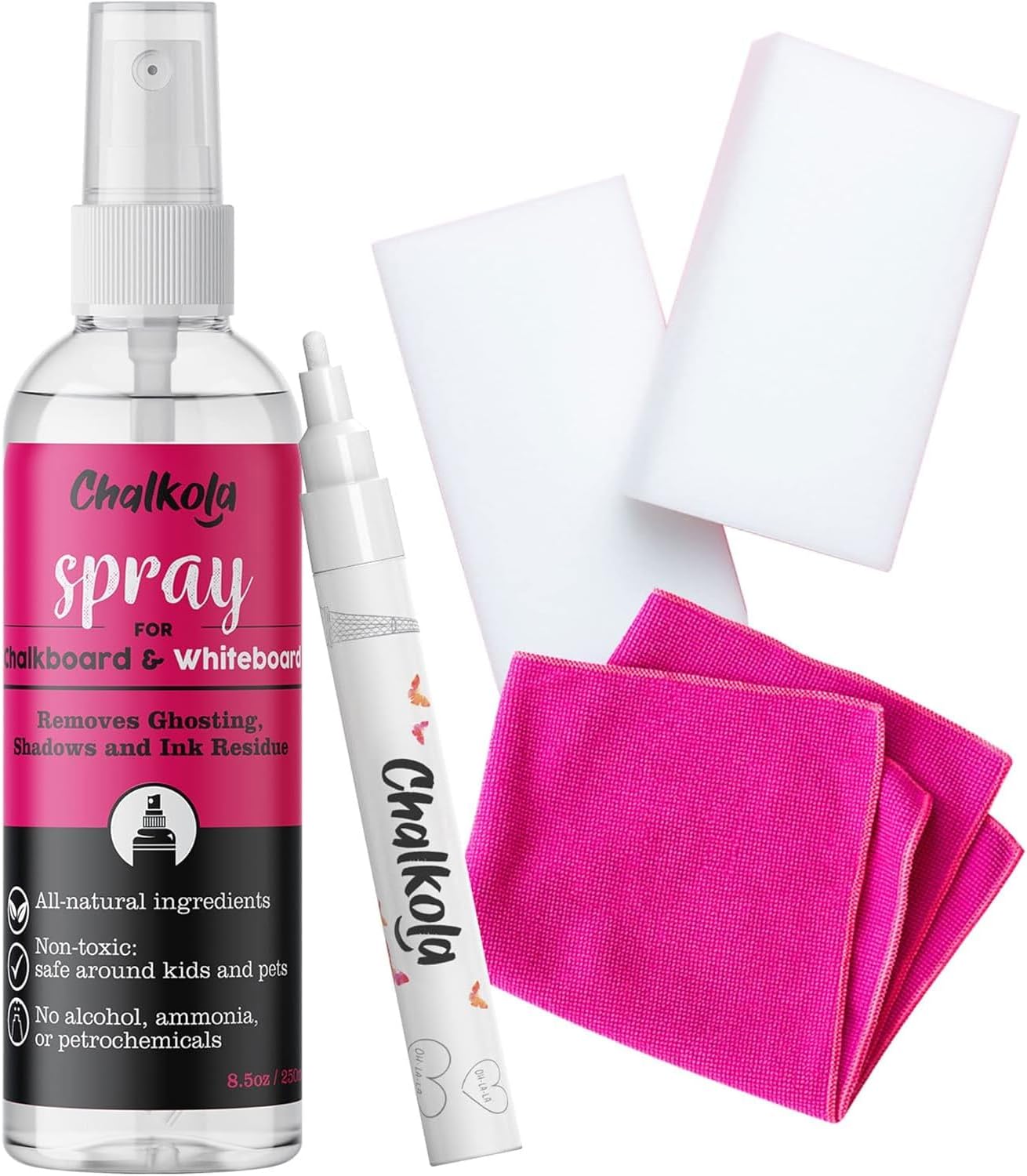
Chalkola Natural Chalkboard Cleaner Spray & Eraser Kit (16 oz)
- Cleaner spray + microfiber eraser + cloth — everything you need to wipe down a chalkboard, whiteboard, or dry-erase board in one purchase.
- 100% natural formula, food-safe — safe to use on kitchen menu boards, café signage, and classroom chalkboards. No ammonia, no harsh chemicals.
- Removes liquid chalk marker ghosting on non-porous boards — even after months of daily use. Standard water alone can't lift accumulated residue.
- 16 oz bottle lasts 6-12 months in typical home or café use. Bulk-friendly pricing for repeat buyers.


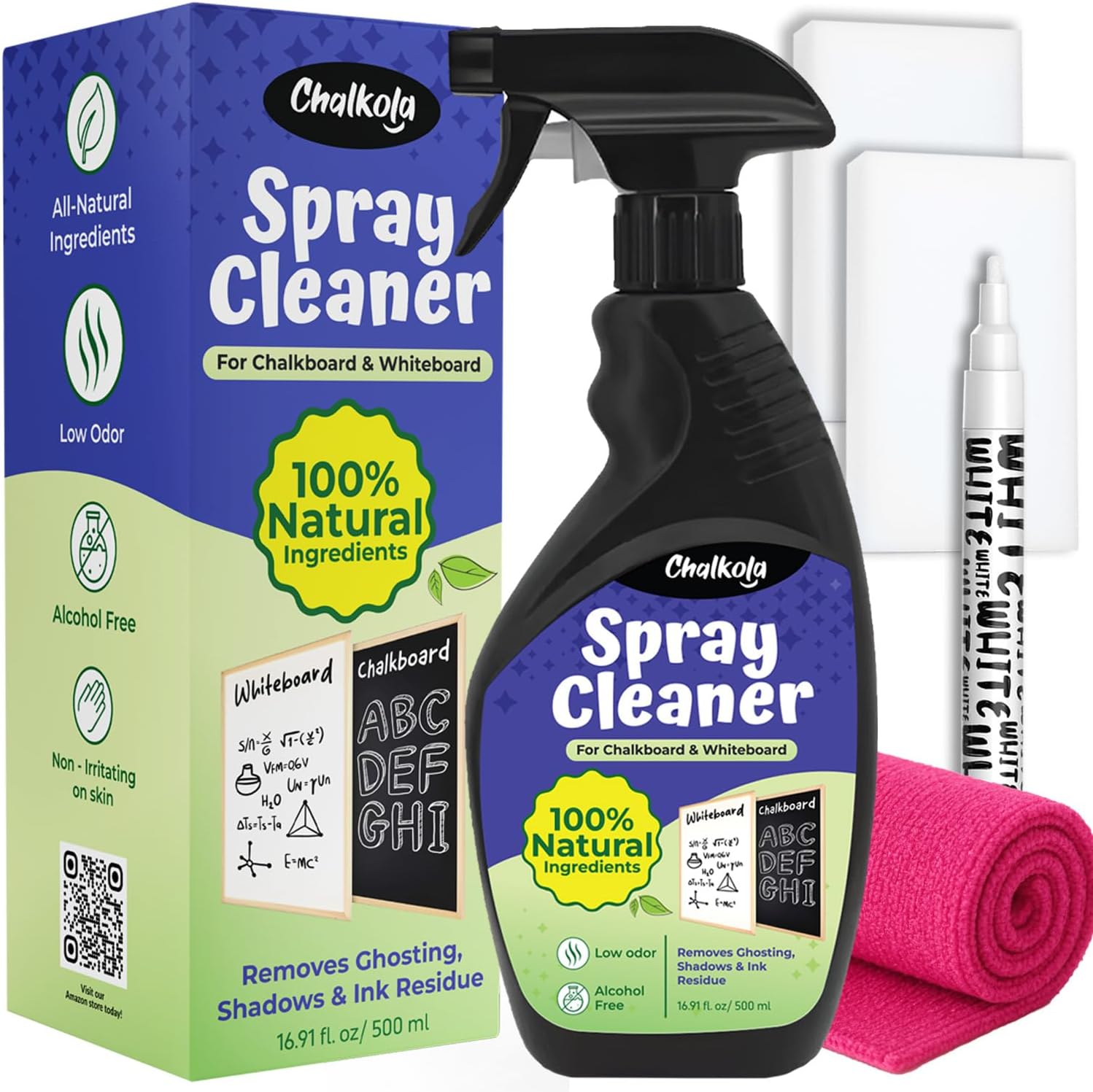
Chalkola Chalkboard & Whiteboard Cleaner Spray Kit (500ml) — 100% Natural Ingredients
- 500ml spray bottle — roughly double the volume of the 16 oz kit. Best for cafés, restaurants, classrooms, and any setting that cleans chalkboards or whiteboards weekly.
- Same 100% natural formula — food-safe, no harsh chemicals, no ammonia. Safe for food-contact surfaces and classrooms.
- Includes the eraser — same microfiber eraser as the smaller kit. Reusable, washable.
- Best per-ml value in the Chalkola cleaner range — $0.038/ml vs $0.045/ml on the 16 oz. Stockup pricing for heavy users.


Frequently asked questions
Is the Chalkola cleaner safe for food-contact surfaces?
Yes — the cleaner is food-safe and non-toxic, appropriate for kitchen menu boards and areas near food prep. No harsh chemicals or residue that could contaminate food. Rinse residue off the surface before direct food contact if you're using it in a food-prep context.
Can I use the kit on a whiteboard?
Yes — the cleaner + microfiber also works on whiteboards, removing dry-erase marker ghosting. Same 5-step process: dry erase first, spray lightly, wipe with microfiber, air dry, check for streaks. Works equally well on glass fridges, windows, and mirrors.
Will the cleaner damage a non-porous chalkboard's coating?
No — it's formulated for chalkboard safety. Unlike generic all-purpose cleaners (which can strip coatings over time with ammonia or bleach), the Chalkola cleaner uses plant-derived surfactants that lift pigment without attacking the acrylic, melamine, or glass surface.
How long does one 16 oz bottle last?
For a typical home kitchen chalkboard used weekly, 6–12 months. Heavy daily use (restaurant, café, classroom) uses about 4 bottles per year — budget accordingly. The bottle is recyclable.
Can I use Windex on a chalkboard?
Short answer: not recommended. Windex contains ammonia, which strips non-porous chalkboard coatings over time, eventually exposing porous substrate and causing permanent ghosting. It works for a rare emergency clean but shouldn't be used regularly. A dedicated chalkboard cleaner is safer for long-term surface health.
Can you use rubbing alcohol on a chalkboard?
Rubbing alcohol dissolves some acrylic coatings used on chalkboards and whiteboards. It's effective for a rare deep clean (once or twice a year max) but damages the surface with regular use. If the board is glass or tempered melamine, alcohol is safer; if acrylic-coated, avoid. Test a corner first.
Will water ruin a chalkboard?
A damp cloth is fine on any non-porous chalkboard. Excess water can damage the frame or warp cheap laminate boards over time, but the writing surface itself is unaffected. Always dry thoroughly after wet cleaning. For porous slate or chalkboard-painted walls, minimize water use — water can over-saturate the surface.
Can I make my own natural chalkboard cleaner?
DIY options include diluted white vinegar (1:4 with water) or baking soda paste (mix 2 tbsp baking soda with 1 cup water). These work for light cleaning but are less effective than dedicated formulations on heavy ghosting. Vinegar can leave a slight smell; baking soda can leave streaks. For regular use, a proper cleaner is worth the cost.
Tools for your next project
Chalkola favorites — ready to ship.


