


How to Choose the Best Chalkboard: Buyer's Guide (2026)
Seven factors — use case, size, material, frame, mounting, chalk type, accessories — that decide the right chalkboard for your home, restaurant, classroom, or event.
What is the best chalkboard?
The best chalkboard for most modern uses is a non-porous framed melamine or glass chalkboard sized 18×24 inches or larger, mounted on a wall or displayed on an easel, used with liquid chalk markers.
This covers roughly 80% of real-world chalkboard projects: home kitchen message boards, café daily specials, wedding signage, classroom visual aids, and office brainstorming walls. The remaining 20% have specialized requirements (classroom slate, portable A-frames, custom installations) covered below.
Start with your use case
Home kitchen
Non-porous, medium size (14×20 to 18×24), framed wood. Menu planning, shopping list, kids' learning zone.
Restaurant / café
Non-porous, large (24×36 and up), heavy-duty wall-mounted or A-frame sandwich board. Daily specials, menu items, sidewalk signage.
Classroom
Porous slate for traditional art rooms; non-porous for modern STEM/tutoring. 3×4 ft wall mount typical.
Wedding / event
Non-porous for ease of cleanup. Decorative framed boards (24×36) or large A-frame ceremony signs.
Retail display
Non-porous, medium-large, distinctive framed. Daily featured product, seasonal promotions, story-telling signage.
DIY accent wall
Chalkboard paint (porous) applied to drywall — for kids' rooms, kitchen alcoves, or creative home decor.
Pick the right size
- Small (9×12 to 12×16): shopping lists, daily notes, kitchen counter displays
- Medium (14×20 to 18×24): menu boards, family calendars, kids' learning boards
- Large (24×36 and up): restaurant wall menus, wedding signage, classroom boards
- XL (4×8 ft): full classroom walls, storefront signage
Rule of thumb: buy one size larger than you think you need. People always want more writing space than they initially expect. Shopping lists grow into meal plans; weekly menus become featured-specials galleries; welcome signs expand into full itineraries.
Pick the right material
| Material | Porosity | Durability | Price range |
|---|---|---|---|
| Tempered glass | Non-porous | Highest (shatter-resistant) | $$$ |
| Melamine | Non-porous | Medium-high | $$ |
| Acrylic-coated wood | Non-porous | Medium | $$ |
| Painted MDF / plywood | Varies | Medium | $ |
| Natural slate | Porous | Very high (heavy) | $$$ |
| Chalkboard paint on wall | Porous | Medium | $ (DIY) |
For modern home and restaurant use, melamine is the sweet spot — non-porous, durable, affordable. Choose tempered glass if you want premium look and maximum longevity. Choose slate only if you specifically want the traditional classroom feel.
Frame style
- Unframed (magnetic metal back) — modern minimalist look, flat wall install, magnetic to hold notes
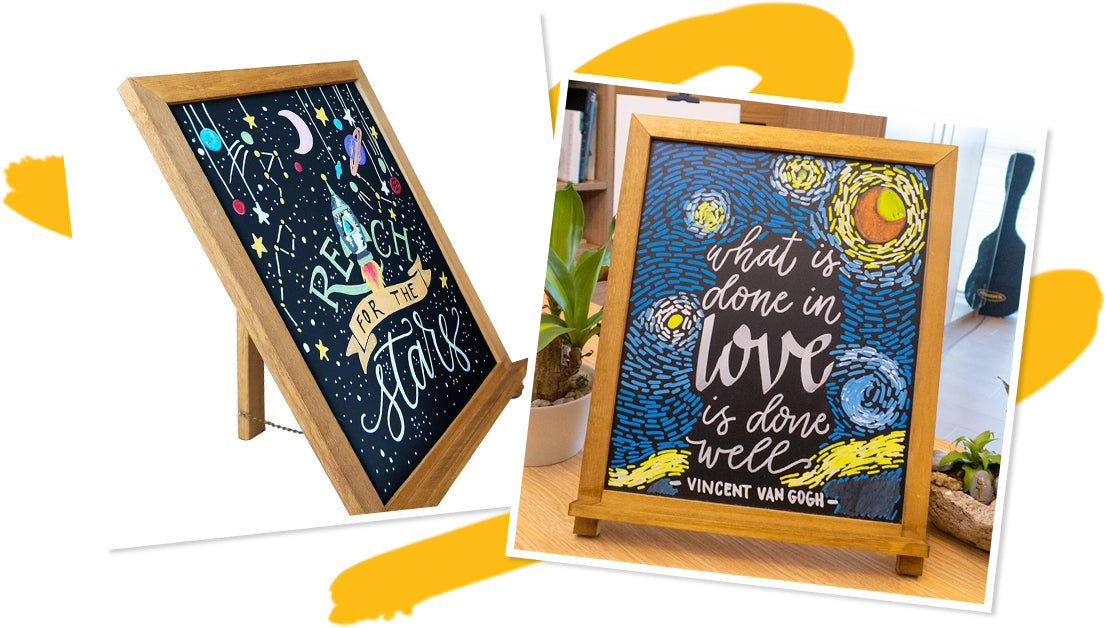
- Thin wood frame — most popular for homes; contemporary farmhouse look, works with any interior
- Thick rustic frame — barnwood, reclaimed look, cozy café vibe, weathered texture
- Ornate frame — gilded or carved; formal dining rooms, bridal showers, wedding receptions
- A-frame sandwich board — two-sided standing board for restaurants and sidewalk storefronts; portable
- Floating frame — minimalist modern, appears unattached to wall
Mounting & installation options
Three main mounting patterns:
- Wall-mounted — permanent install. Use heavy-duty drywall anchors or screws into studs for boards over 18×24. Level is critical — crooked boards look immediately wrong.
- Easel or standing — portable, easy to move or rotate. A-frame sandwich boards sit in this category. Great for events that change venues.
- Counter-top — smaller boards with built-in stands. For kitchen counters, retail display tables, and trade-show booths.
For anything over 18×24 mounted on drywall, anchor into studs for long-term stability — picture wire alone won't support the weight over time.
What chalk is best for a chalkboard?
The right "chalk" depends on your board type:
- For non-porous boards: liquid chalk markers (our specialty). Vibrant colors, no dust, wipe clean with water. Chalkola offers 5, 8, and 10-pack sets.
- For porous boards: traditional stick chalk. Classroom-grade dustless chalk is best for heavy daily use. Artist-grade soft pastel chalk gives the richest color for decorative projects.
- For outdoor use: weather-resistant chalk markers (look for "water-resistant" on the label) or dry-erase markers if the board is fully non-porous.
Our chalk marker lineup: 5-pack fine + jumbo, 8-pack classic colors, 10-pack vintage colors.
What else you need
Beyond the chalkboard itself:
- Markers or chalk — non-porous: liquid chalk markers. Porous: stick chalk.
- Eraser — felt for stick chalk, microfiber cloth for liquid markers
- Cleaner — our natural chalkboard cleaner kit ($19.95) for long-term maintenance
- Optional: templates or stencils for consistent lettering, especially for restaurants with changing daily specials
- Mounting hardware — heavy-duty drywall anchors or stud screws for boards over 18×24
Frequently asked questions
What size chalkboard is best for a home kitchen?
14×20 or 18×24 inches is the sweet spot. Big enough for weekly meal plans and shopping lists, small enough to fit on any wall or counter. If you have wall space, go 24×36 for family calendars and full menu planning.
Should I get a porous or non-porous chalkboard?
For nearly all modern uses, non-porous. Works with liquid chalk markers (vibrant colors, easy cleanup), no ghosting, food-safe for kitchens. Only choose porous if you specifically want the traditional classroom slate-and-chalk aesthetic and accept that liquid markers will stain.
Can I mount a chalkboard without drilling into the wall?
Yes — Command strips work for boards under 12×16 inches. For larger boards, use picture hanging wire with heavy-duty wall hooks that spread weight across multiple points. For anything over 18×24, drill into studs for long-term stability.
What is a sandwich board chalkboard?
A self-standing A-frame with two chalkboard faces connected at the top. Perfect for restaurants and cafés that want a sidewalk display. Usually 24–36 inches tall, hinged at the top so it folds flat for storage. Can be carried inside at night.
How long do chalkboards last?
With reasonable care, decades. Non-porous glass boards last indefinitely. Painted surfaces can wear over 10+ years with heavy daily use. Slate is essentially permanent unless broken. Replacement is usually driven by design preferences, not wear.
What is the best chalk for chalkboards?
For non-porous chalkboards, liquid chalk markers (our Chalkola chalk markers are optimized for this). For porous slate boards, dustless classroom-grade chalk. For decorative soft-chalk art on porous boards, artist-grade pastel chalk offers richer color.
What's a good chalkboard for wedding signage?
A 24×36 inch non-porous framed chalkboard with a thin wood or rustic frame. Used for seating charts, welcome signs, and ceremony details. After the wedding, many couples keep it as a keepsake with the original lettering preserved, or reuse for daily home messages.
Tools for your next project
Chalkola favorites — ready to ship.


