


Why Paint with Acrylics? The Complete Guide
The case for the most versatile paint medium ever invented — and why it's the best first paint for beginners.
What makes acrylics special
Acrylic paint is a pigment suspended in acrylic polymer emulsion — a plastic-based binder that's water-soluble when wet and permanent when dry.
That one technical detail is what makes acrylics so useful. While you're painting, you can thin acrylics with water (like watercolor), blend them on your palette (like oil paint), and clean up with soap and water. Thirty minutes after applying, the paint dries to a flexible, waterproof, UV-resistant film that won't yellow, crack, or fade for decades. No solvents, no fumes, no setup, no waiting days for layers to cure.
Water cleanup
Brushes, palettes, spills — all rinse off with tap water while wet.
Fast drying
Most acrylics are touch-dry in 10–30 minutes. Paint over the layer the same day.
Archival
Once dry, acrylic paintings last 100+ years without yellowing, cracking, or fading.
Why acrylics beat oils and watercolors as a first paint
There's no wrong way to start with acrylics. Three beginner-friendly traits:
- Fast correction. Mistake? Wait 5 minutes. The layer dries, you paint over it. With oils you wait days; with watercolors a mistake often can't be fixed at all.
- Cheap setup. A 32-color student set + 10 canvas panels + 5 brushes costs under $60. Oil paints alone cost 2–3× that.
- Safe indoors. No turpentine, no mineral spirits, no toxic fumes. Paint on a kitchen table; the windows don't need to be open.
Students can learn core painting skills — value, composition, color mixing, brushwork — with acrylics and later transfer everything to oils if they choose. For most artists, acrylics are home base for life.
What acrylics stick to
Acrylic polymer is a surprisingly strong adhesive. Beyond canvas and paper, acrylic paint works on:
Canvas + panels
The classic surface. Pre-stretched, pre-primed canvas or sealed panels. No extra prep needed.
Paper + cardstock
Acrylic paper (heavy, textured) or 300-gsm watercolor paper. Thin washes work beautifully.
Wood
Raw or primed wood panels. Sand, optionally seal, then paint. Great for fine-art panels and DIY signs.
Walls + masonry
Indoor murals, outdoor (with sealer). Prep with a bonding primer for best adhesion.
Fabric
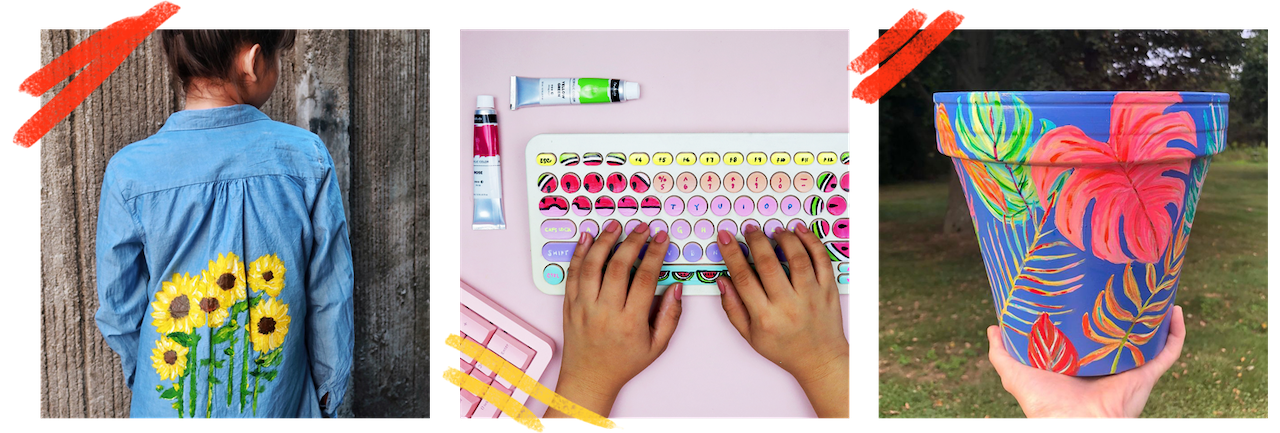
Cotton, denim, canvas totes — mix acrylic with a textile medium, heat-set with an iron.
Plastic, glass, metal
Prime with gesso or a bonding agent first. Good for craft projects and mixed media.
What you can do with acrylics
Acrylics are the most versatile paint medium. Depending on dilution and technique, they can mimic:
- Watercolors — thin with water (1:3) and apply in transparent washes.
- Oil paint — use straight from the tube with a slow-dry medium for buttery blends.
- Gouache — add matte medium for opaque, flat color with zero sheen.
- Enamel — add gloss medium for a hard, shiny, almost-lacquer finish.
- Impasto — mix with heavy gel or modeling paste for palette-knife textures.
More on each in our Acrylic Painting Techniques deep-dive.
Student, artist, and professional grade acrylics
Acrylic paint comes in three tiers: student grade (lower pigment load with more filler), artist grade (rich pigment at an accessible price — this is where Chalkola sits), and professional grade (highest pigment concentration and ASTM-I archival lightfastness).
| Student grade | Artist grade (Chalkola) | Professional grade | |
|---|---|---|---|
| Pigment load | Lower (more filler + extender) | High (rich, vibrant, true colour) | Highest (maximum pigment per ml) |
| Colour range | 20–36 colours | 32–64 colours + metallics | 80–200+ single-pigment colours |
| Lightfastness | Not always rated | Rated, suitable for lasting work | ASTM Lightfast I guaranteed |
| Certifications | Sometimes AP non-toxic | AP non-toxic · ASTM D-4236 · EN71 | AP non-toxic · ASTM D-4236 |
| Best for | School projects, kids' practice | Hobbyists, serious beginners, developing artists, craft projects, teachers, studio use | Gallery work, exhibition pieces, collectible works |
Chalkola acrylics are artist grade — richly pigmented, AP-certified non-toxic, and ASTM D-4236 & EN71 certified. See our acrylic paint products for the full lineup (40-piece, 56-piece, and 95-piece kits).
Where acrylics came from
Acrylic paint is a modern invention. The first artist-grade acrylic appeared in the 1940s from the Mexican research institute INM/Politec, and the first commercial line (Magna) launched in 1947. the first water-based acrylic for artists launched in 1955, and by the 1960s artists like David Hockney, Andy Warhol, and Helen Frankenthaler had adopted acrylics as their primary medium.
We tell the full story in A Brief History of Acrylics.
Who should paint with acrylics
Beginners — cheapest way to learn, safest indoors, most forgiving of mistakes.
Mixed-media artists — acrylics stick to almost anything, so they blend into collage, resin, textile, and sculpture work.
Muralists + sign painters — durable, UV-resistant, archival outdoors with a clear sealer.
Craft makers — wood signs, painted rocks, custom ceramics, decorative pieces.
Serious fine artists — modern artist-grade acrylics rival oils in color quality while eliminating solvent fumes.
Frequently asked questions
Is acrylic paint good for beginners?
Yes — it's the recommended starter medium for most new painters. Water cleanup, fast drying, cheap setup, and forgiving of mistakes. You can fix errors within minutes rather than waiting days as with oils.
How do acrylics compare to oil paint?
Acrylics dry fast (30 min) and clean up with water. Oils dry slowly (1–7 days) and need solvents for cleanup. Oils give richer color blending and a smoother, glossier finish; modern artist-grade acrylics close much of that gap but never fully replicate it. Beginners should start with acrylics.
How do acrylics compare to gouache or poster paint?
Gouache is opaque like acrylic but stays re-wettable forever — great for illustrators, but you can't varnish it or hang it without glass. Poster paint and tempera are even cheaper but chalky, fade fast, and aren't archival. Acrylic sits between watercolor and oil: opaque or transparent, permanent once dry, archival for 100+ years. For finished paintings you'll keep, acrylic wins.
Can I paint over acrylics with oils?
Yes — oil over acrylic is a valid technique (the reverse — acrylic over oil — doesn't adhere well). Many modern artists use a fast-drying acrylic underpainting and finish with oils on top. Make sure the acrylic is fully cured (24 hours) before oil painting over it.
Can I use acrylics on fabric, wood, or glass?
Yes — acrylic adheres to most surfaces. On fabric, mix paint with a textile medium (1:1) so the paint stays flexible after washing; heat-set with an iron. On wood, sand lightly and apply gesso first for crisp colour. On glass, use enamel-acrylic or a glass primer — straight acrylic chips off smooth glass over time. Hardware stores carry the right primer for any surface.
Are acrylics suitable for outdoor murals?
Yes — exterior-grade acrylic is the most common medium for modern murals. Use heavy body or fluid acrylics for the painting, then seal with two coats of a UV-rated exterior acrylic varnish (matte, satin, or gloss). A properly sealed acrylic mural lasts 8–15 years in direct sun before needing touch-ups. Without sealing, expect 2–3 years before fading shows.
Why do art teachers recommend acrylics for kids?
Three reasons: (1) water cleanup means no solvent fumes in classrooms, (2) AP-certified non-toxic formulas (like Chalkola) are safe for ages 6+, (3) fast drying means kids see finished results in one session — matching attention spans. Mistakes wash off skin and (if caught wet) most fabric. The trade-off: dried acrylic is permanent on clothes, so smocks are essential.
Tools for your next project
Chalkola favorites — ready to ship.


