


How to Choose the Right Canvas: Panel, Stretched, Size Guide
How to pick the right canvas — panel vs. stretched, 5×7 to 24×36 sizes, primed vs. raw, 8 oz to 14 oz weight — for your specific project and skill level.
What type of canvas is best for acrylic painting?
The best canvas for acrylic painting is a pre-primed cotton canvas panel, 8×10 or 9×12 inches, 10 oz weight. It's rigid, inexpensive ($1–3 per panel in bulk), ready to paint out of the pack, and handles acrylic's water content without warping.
For larger pieces (16×20 and up) or work you plan to hang gallery-style without a frame, switch to stretched canvas. But for practice, learning, and most finished pieces, canvas panels are the industry-standard choice.
Canvas panel, stretched canvas, or canvas board?
- Canvas panel — canvas glued to MDF or pressed board. Rigid, affordable, stackable. Best for beginners, studies, and most finished pieces up to 16×20.
- Stretched canvas — canvas stretched over a wooden frame, unframed or gallery-wrapped. Traditional, more expensive ($5-15+), best for pieces you plan to hang without framing.
- Canvas board — same idea as canvas panel but slightly thinner and cheaper. Usually student-grade.
For most beginner and intermediate work: canvas panels. For finished pieces you'll hang: stretched canvas.
Picking the right canvas size
| Size (in) | Good for | Price range |
|---|---|---|
| 5×7 | Daily practice, postcards, small studies | $1 |
| 8×10 | Beginner's first painting, portrait studies | $1–2 |
| 9×12 | Landscape studies, sketching | $2 |
| 11×14 | Finished small pieces, gift-worthy | $3–5 |
| 16×20 | Confident medium pieces | $5–10 |
| 24×36+ | Gallery pieces, statement work | $15+ |
Start with 8×10 or 9×12. Buy in bulk (15 or 20 pack) to have spare canvases on hand — beginners abandon paintings often, and having another canvas ready lets you pick back up without a store trip.
Pre-primed vs. raw canvas
Nearly all retail canvas sold today is pre-primed with acrylic gesso. You can paint directly on it without any preparation. Raw (unprimed) canvas is rare and only used for:
- Artists who want to color the primer themselves for a custom ground
- Soak-stain techniques (Helen Frankenthaler style) that require unsized canvas
- Some mixed media where canvas texture is the main feature
For 99% of beginners and most professionals: pre-primed canvas panels are the right choice. Saves a half-day of prep.
What happens if I don't use gesso?
Gesso is an acrylic-based primer that seals the canvas fibers. Without gesso:
- Paint soaks in. Oil paint's linseed oil and acrylic's water both get absorbed by the raw canvas fibers, making the paint look dull and flat rather than vibrant.
- Canvas deteriorates. Unsized canvas degrades faster under paint — raw fibers react chemically with oil paint over decades, causing cracking and yellowing.
- Much more paint needed. You'd need 3-4 coats of paint to cover the same area compared to 1 coat on primed canvas.
Good news: pre-primed canvas panels come with 2 coats of gesso already applied. You can paint straight out of the pack. Chalkola's canvas panels are all pre-primed with acrylic gesso.
Can you paint acrylic directly on canvas?
Yes — acrylic paint is designed to be applied directly onto primed canvas. It's the most common painting workflow. Steps:
- Open a pre-primed canvas panel (no prep needed).
- Squeeze out paint onto a palette.
- Paint directly with brushes, palette knives, or acrylic paint markers.
- Let dry (20-60 minutes between coats).
- Apply varnish if desired (4-6 weeks after the final coat).
If the canvas is unprimed (rare), apply 2 coats of gesso first. But for any canvas bought from Chalkola, Dick Blick, Michaels, or other art-supply retailers: paint directly.
Canvas weight
Canvas weight is measured in ounces per square yard. Most art canvas is:
- 8–10 oz — student grade, lighter, cheaper. Fine for practice.
- 10–12 oz — intermediate. The industry standard for quality panels.
- 14 oz+ — professional grade. Heavier texture, better for oil or thick acrylic work.
Chalkola canvas panels use 10 oz canvas — the sweet spot for acrylic, acrylic paint markers, and light watercolor work.
Which canvas for which project?
Learning / practice
8×10 canvas panels in bulk packs of 15–25. Low cost per panel, unlimited experimentation without fear of wasting expensive canvas.
Plein-air / travel
9×12 or 11×14 canvas panels. Light, rigid, fit in a sketching backpack. Don't flex in wind.
Gift-worthy pieces
11×14 or 16×20 canvas panels or small stretched canvas. Deserves a frame or gallery-style mounting.
Gallery / display
Stretched canvas 16×20 and up. Gallery-wrapped for frameless hanging. Statement work.
Is it cheaper to buy or make a canvas?
For under 16×20 inches: buying is cheaper. A 15-pack of 8×10 canvas panels costs $23.95 ($1.60 each) — impossible to DIY at that price given materials (canvas + MDF + gesso) run $3-5 per panel retail.
For over 24×36 inches: DIY stretched canvas can save money. A 36×48 stretched canvas retails for $50-80; building one from scratch costs $15-25 in materials plus 30-45 minutes of labor. Still requires wooden stretcher bars, canvas fabric, staple gun, and gesso.
Most hobbyists buy pre-made for every size. DIY is worth it only for specific custom dimensions or large-scale work. For learning, studies, and any finished piece under 16×20: buy pre-made panels. You'll paint more and think less about surface prep.
Chalkola canvas recommendations
- 15-pack of 8×10 inch ($23.95) — best for practice and beginners
- 15-pack of 5×7 inch ($25.95) — daily practice, postcards, small studies
- 15-pack of 9×12 inch ($28.95) — landscape studies, plein-air work
- 15-pack of 11×14 inch ($29.95) — finished pieces worth keeping
- 20-pack variety (5 sizes) ($41.95) — explore scale
- 25-pack variety (5 square sizes) ($40.95) — Instagram-ready squares
- 24-pack variety (6 sizes) ($47.95) — includes 12×16
- Bundle: 32 acrylic paints + 15 canvases ($33.95) — complete starter
Featured Chalkola canvas kits — over 11,200 reviews · 4.8★ avg
Five live Chalkola canvas kits on Amazon. All 100% cotton, primed, acid-free panels. Free Prime shipping across the USA.

Chalkola 8×10 Canvas for Painting (15 Pack) — 100% Cotton, Primed, Acid-Free
- 15 small 8×10 canvas panels — the industry sweet spot for beginner acrylic painting and daily practice. Finishes in one session.
- 100% cotton, factory-primed — 2 coats of acrylic gesso. Paint directly with acrylic, oil, or tempera. Ready to use right out of the box.
- Acid-free, archival panels — won't yellow, warp, or break down. Stores flat without bending.
- $1.46 per panel — well below craft-store pricing for the same size and quality. Bulk pricing makes daily practice affordable.


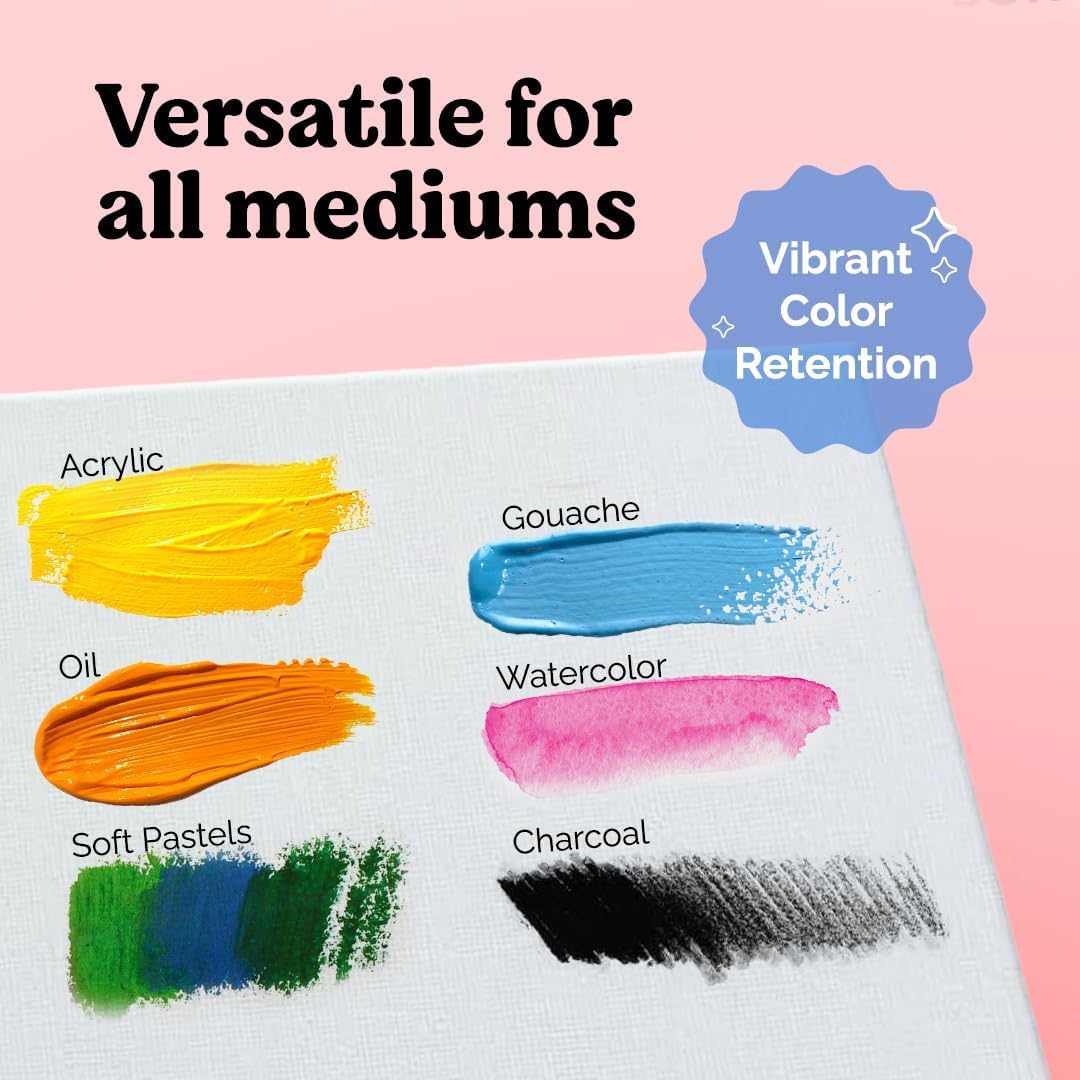

Chalkola Paint Canvas Panels 9×12 inch (15 Pack) — Acrylic & Oil, 100% Cotton
- 15 panels at 9×12 inch — the classic landscape format. Perfect for plein-air sessions, sketchbook studies, and finished pieces small enough to frame as a series.
- 100% cotton on rigid MDF backing — won't flex like stretched canvas. Ideal for impasto, palette-knife work, and mixed media.
- Pre-primed, acid-free, professional grade — same surface quality as gallery-grade artist boards.
- $1.33 per panel — best per-unit cost in the Chalkola canvas range. Daily practice without thinking about price.


Chalkola 11×14 Canvas for Painting (15 Pack) — Acrylic, Oil, Watercolor Ready
- 15 panels at 11×14 inch — gallery-display size. The point where pieces become "finished work worth framing" rather than "studies." Common framing standard.
- Multi-medium ready — primed for acrylic and oil; with a watercolor-ground topcoat, also handles watercolor on canvas.
- Rigid 100% cotton + acid-free — no flex, no warping, no yellowing. Stores flat in stacks.
- $1.80 per panel — premium-canvas quality at hobby pricing. Each panel framed sells for $40-150 in local craft markets.
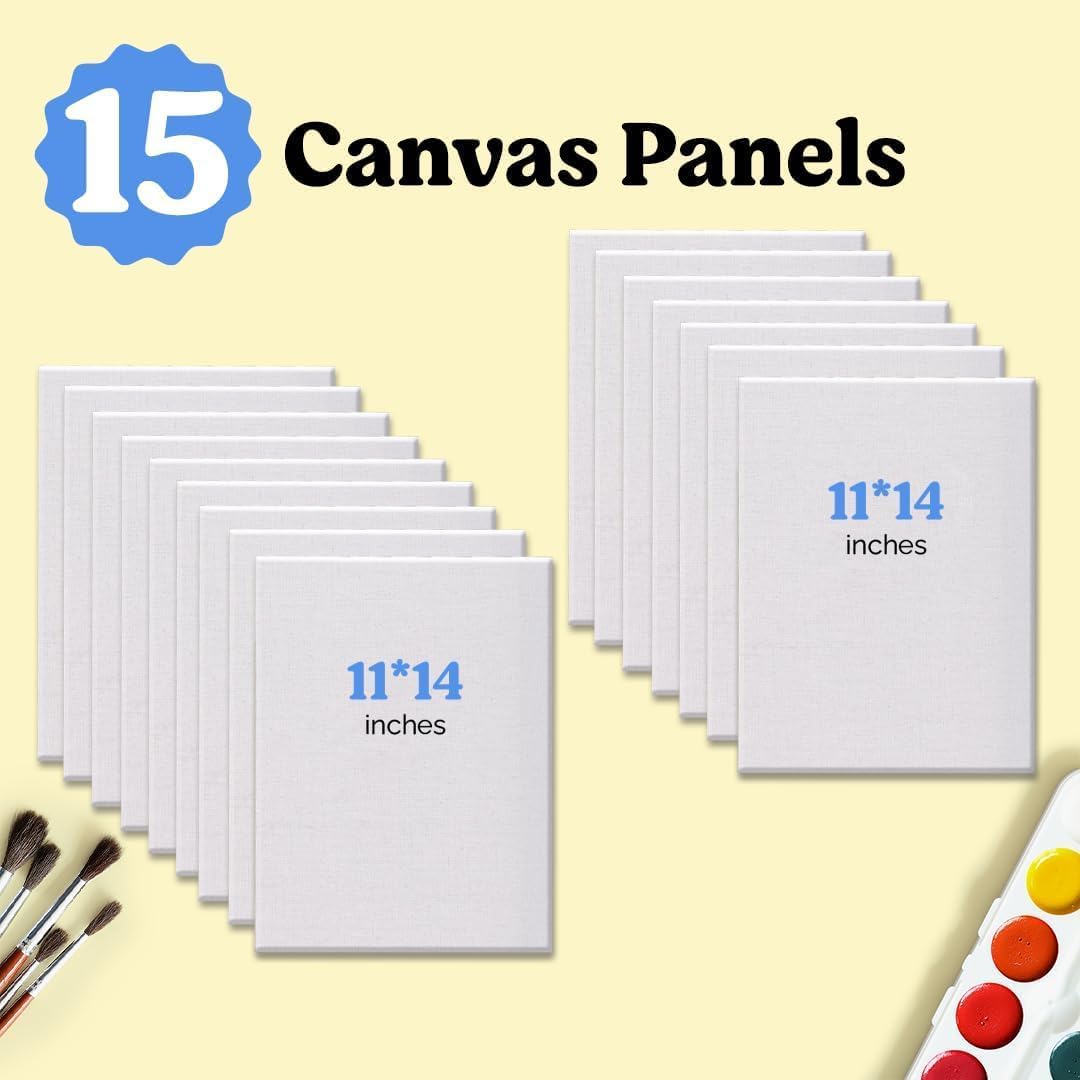


Chalkola Canvas for Painting (20 Bulk Pack) — 5×7, 8×10, 9×12, 11×14 inch | 100% Cotton
- 20 panels in 4 sizes — 5 each of 5×7, 8×10, 9×12, and 11×14. Test every standard size and find your preferred format before committing to a single bulk pack.
- Best for beginners and gift-givers — variety covers practice studies (5×7), session work (8×10), landscape (9×12), and framed pieces (11×14). One purchase = months of painting.
- 100% cotton, factory-primed, acid-free — same archival quality across all sizes. Ready for acrylic, oil, or tempera straight from the box.
- $1.60 per panel average — cheaper per panel than buying single-size 15-packs because of the bulk variety pricing.


Chalkola Black Canvas (25 Pack, Square Panels) — 4×4, 6×6, 8×8, 10×10, 12×12 inch
- 25 BLACK-primed canvas squares in 5 sizes — 5 each of 4×4, 6×6, 8×8, 10×10, 12×12. The opposite of standard white canvas: light colours pop, neon hits hard, metallic looks luminous.
- Instagram-ready square format — every panel is square, optimized for social-media composition. No cropping needed.
- Black 100% cotton with primer-sealed surface — works with acrylic paint markers, white gel pens, neon acrylic, gold/silver leaf, and metallic paint. Conventional acrylic also works but neutralizes contrast.
- $1.28 per panel average — cheapest per-unit Chalkola canvas. Best for experimental work, neon series, and gallery wall arrangements.


Frequently asked questions
What's the best canvas size for a beginner?
8×10 inches. Small enough to finish in one session, big enough for composition practice. Cheap enough to abandon without guilt if the painting doesn't work out. A 15–25 pack lets you practice without store trips between sessions.
Should I buy canvas panels or stretched canvas?
Canvas panels for practice, studies, and learning. Stretched canvas for pieces you'll hang in a home or gallery. Panels are cheaper ($1–3 each vs. $5–15) and store flat. Stretched canvas has a traditional gallery look.
Do I need to prime my canvas before painting?
Pre-primed canvas (which is almost all retail canvas today) doesn't need extra priming. You can paint directly. Raw canvas needs 1-2 coats of gesso first. Chalkola panels come factory-primed with 2 coats of acrylic gesso.
Can I use watercolor on canvas panels?
Standard acrylic-primed canvas doesn't work well for watercolor — the paint beads and doesn't absorb. For watercolor on canvas, apply a watercolor ground (a specialty primer made for watercolor) first, or use watercolor paper instead of canvas.
What's the difference between your 20-pack and 25-pack variety canvases?
The 20-pack has 5 rectangular sizes (5×7, 8×10, 9×12, 11×14). The 25-pack variety has 5 square sizes (4×4, 6×6, 8×8, 10×10, 12×12) — all squares, great for Instagram-ready pieces. Different applications.
Is it cheaper to buy or make a canvas?
For anything under 16×20 inches, buying in bulk is cheaper — a Chalkola 15-pack of 8×10s works out to $1.60 per panel, well below DIY cost of materials. For custom sizes or anything over 24×36, DIY stretched canvas can save money if you have the stretcher bars, staple gun, and willingness to prep.
Can you paint acrylic directly on canvas?
Yes — acrylic paint is designed to be applied directly onto primed canvas. No preparation needed for any Chalkola or retail canvas. Squeeze paint onto your palette, paint, let dry 20-60 minutes between coats, varnish if desired.
Tools for your next project
Chalkola favorites — ready to ship.


