


Why Paint with Watercolors? The Complete Guide
The case for the oldest and most portable paint medium — luminous color, water's surprise, and the joy of painting anywhere.
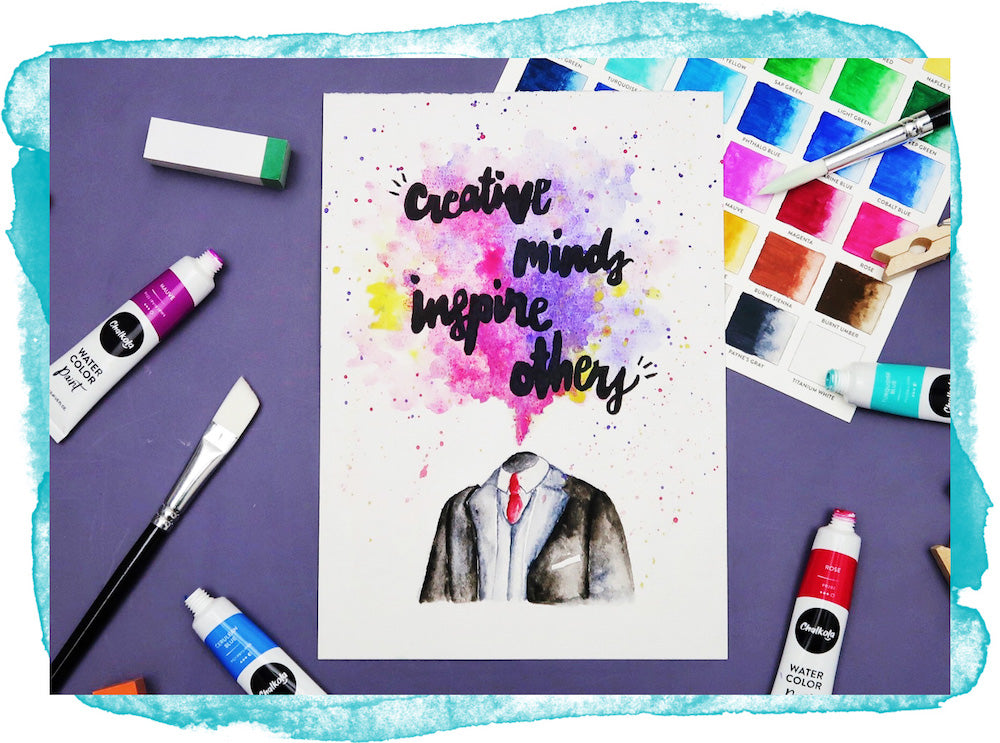
Watch Chalkola's own watercolor book illustration demo.
Watercolor in one sentence
Watercolor is transparent, water-activated pigment that creates luminous color by layering thin washes on white paper. Because the paint is transparent, the untouched paper shines through each layer — giving watercolor its signature glow.
The whites in a watercolor painting aren't white paint — they're the untouched paper glowing through the transparent pigment. That simple technical fact is what makes watercolors shine in a way no other paint can match. Colors get their light from underneath, not from the pigment itself.
Luminous color
Transparent pigment lets paper glow through — colors look lit from within, not painted on.
Maximum portability
A pocket palette + pad + water brush = a complete painting kit that fits in a jacket pocket.
Surprise and flow
Water moves pigment in unexpected ways — watercolor embraces accident as part of the medium.
Six reasons artists love watercolors
- Portability. Watercolor travels. A tin palette, a water brush, and a sketchbook fit in any bag — no easel, no solvents, no setup.
- Speed. A watercolor sketch takes 5–15 minutes. Oil paintings take days or weeks. Watercolor matches the rhythm of travel, journaling, and urban sketching.
- Light. Transparent layers interact with the paper's white, creating a luminous quality other media can't replicate.
- Water's magic. Pigment moves in unpredictable, beautiful ways when wet. Blooms, flows, edges — half the painting is water doing its thing.
- Cheap setup. A good student watercolor set (24–36 colors) + paper pad + 2 brushes = $40 and you're ready.
- Zero-toxicity. Water cleanup, no fumes, safe for kids and studio apartments.
Watercolor vs. acrylic vs. oil
| Watercolor | Acrylic | Oil | |
|---|---|---|---|
| Transparency | High | Adjustable | Adjustable |
| Drying time | 5–20 min | 10–30 min | 1–7 days |
| Forgiveness | Low | High | Very high |
| Portability | Excellent | Good | Poor |
| Cleanup | Water | Water | Solvent |
| Toxicity | None | None | Some (solvents) |
| Best for | Loose, expressive, on-location | Studio work, mixed media | Realism, fine detail |
Watercolor has a reputation for being "hard" — that's because once paint hits paper, you can't easily undo. The craft is planning ahead and letting water surprise you. Not harder than oil or acrylic, just a different kind of skill.
What watercolor paints best
Landscapes
Mountains, seascapes, skies — watercolor captures atmospheric depth and mist naturally.
Botanical illustration
Centuries of tradition. Translucent petals, soft leaf gradients, delicate lines.
Urban sketching
On-location painting of cafés, street scenes, architecture — the portable paint of record.
Water and reflections
Oceans, rivers, wet streets — water paints water beautifully.
Abstract studies
Color experiments, pour-and-blot, wet-in-wet explorations.
Pen-and-watercolor
Line drawings with transparent color — a defining illustrator style for centuries.
How do you start a watercolor painting?
Start by sketching your composition lightly in pencil. Wet the sky area with clean water, then drop in blue pigment and let it bloom. Paint light-to-dark, saving your whites as untouched paper. Work from large washes to small details.
The beginner trap is to "correct" a wet area by over-brushing. Don't. Watercolor rewards patience — lay down a wash, walk away, let it dry, then assess. A 15-minute painting with one dry cycle looks more finished than a 2-hour painting where you reworked every inch.
- Sketch lightly in pencil (2H).
- Decide whites — mark them lightly or apply masking fluid.
- Paint the sky or largest wash first, wet-on-wet.
- Let dry completely (5–15 minutes).
- Paint mid-tones, wet-on-dry.
- Let dry again.
- Add darkest accents and detail last.
What to expect as a beginner
First month: lots of muddy colors and blooms in the wrong places. Normal. Keep going.
Month 2–3: you start understanding water control — how wet is too wet, when to stop adding paint.
Month 4–6: first paintings you're actually proud of. Color mixing becomes intuitive.
Year 1: competent studies from photos and simple plein air. Maybe a series emerging.
Year 2+: confident loose style. Can capture a scene in 15 minutes.
A daily 15-minute watercolor sketch in a small journal beats a weekly 3-hour studio session. Watercolor rewards frequent, casual practice.
Pans, tubes, and brush pens
Watercolor comes in three main formats:
- Pans (dry cakes). Hard squares of dried paint, activated by a wet brush. Compact, travel-ready, last forever. Cheap student sets and premium artist kits both use pans.
- Tubes. Creamy watercolor paste in a tube, squeezed into a palette well. More pigment per stroke, better for studio work and large washes. What serious watercolorists usually use.
- Watercolor brush pens. Dye-ink markers with a flexible brush tip. More like colored ink than traditional watercolor — great for beginners, journaling, loose sketching. Chalkola's brush pen set is a popular intro.
Frequently asked questions
Is watercolor harder than acrylic?
It's different, not necessarily harder. Watercolor is less forgiving — you can't easily paint over mistakes. Acrylic lets you layer endlessly. Many artists find watercolor easier for outdoor/travel sketching; acrylic easier for controlled studio work. The learning curves are comparable.
What's the cheapest way to start with watercolors?
A $15–25 student set with 24–36 pan colors, a $10 watercolor paper pad (140-lb), and 2 brushes ($10) — total $35–45. The Chalkola 36-color watercolor set at $37.95 covers paint + palette in one purchase.
What brushes are best for watercolor?
Round brushes in sizes 4, 8, and 12 cover most needs. Natural hair (squirrel, sable) holds water better; synthetic is cheaper and works fine for learners. A large mop brush is useful for big washes. Budget $15–25 for a good starter set of three.
How long does watercolor take to dry?
Thin washes dry in 5–10 minutes at normal room humidity. Thick washes or very wet paper can take 20–40 minutes. A fan or hairdryer speeds it up, but rushing often flattens the natural blooms that watercolor is loved for.
Why do artists describe watercolor as meditative?
Watercolor forces you to slow down — washes need time to bloom and dry, and you can't bulldoze through with thick paint the way you can with acrylic. The process becomes a rhythm of pigment, water, and waiting. Many artists use it as a daily mindfulness practice — 15 minutes of small studies before bed or with morning coffee.
Can I use watercolor for journaling and travel sketching?
Yes — it's the #1 travel medium worldwide. A pan set, a small water-brush (built-in water reservoir), and a postcard-size sketchbook fit in any pocket. No solvents, no drying issues on planes, cleanup with a sip of water. For urban sketchers and journalers, watercolor is the obvious choice over acrylic or oil.
Does watercolor cost less than acrylic over time?
Per painting, yes — significantly. Watercolor uses a fraction of the pigment per piece (a 12 ml tube of student watercolor lasts months of daily painting). You don't need canvas (paper is cheaper), no varnish, no solvents. Long-term, expect to spend roughly 30-40% of what an equivalent acrylic practice would cost.
Why do watercolor artists value transparency?
Transparency lets light bounce off the paper through the pigment and back to your eye — that's where watercolor's signature glow comes from. Opaque paints (gouache, acrylic) reflect light off the surface. With watercolor, the white of the paper is part of the painting, not just the background — which is why beginners are taught to "save your whites" from day one.
Tools for your next project
Chalkola favorites — ready to ship.


