


Basic Acrylic Painting Supplies
Exactly what to buy for your first acrylic painting — nothing more, nothing less. Budget estimates and bundle recommendations.
Quick Q&A on canvas support and what to buy for your first painting.
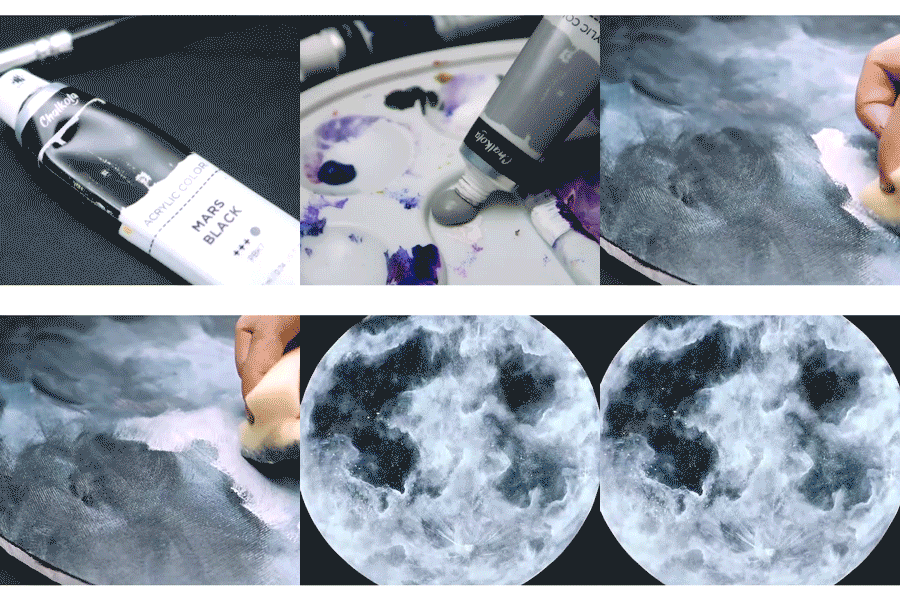
Acrylic paint (pick a starter set)
You don't need 60 colors to start. A 24–32-color student set covers every mixable hue. Look for:
- 22-ml tubes (standard size) — enough for dozens of paintings
- Titanium white + Mars black included — you'll use white most
- AP non-toxic label — safe for home use
- Heavy body consistency — versatile for thick and thin techniques
Chalkola's 32-color set at $24.95 or the 64-color set at $45.95 both fit the bill.
Canvas and panels
Starter surfaces:
- Canvas panels — rigid, affordable, great for beginners. $1–2 each.
- Pre-stretched canvas — traditional, more expensive ($5–15 each).
- Acrylic paper pads — tear-off sheets for practice ($10–20 per pad).
Common beginner sizes: 8×10, 9×12, 11×14, 16×20 inches. Start small.
Brushes (5 is enough)
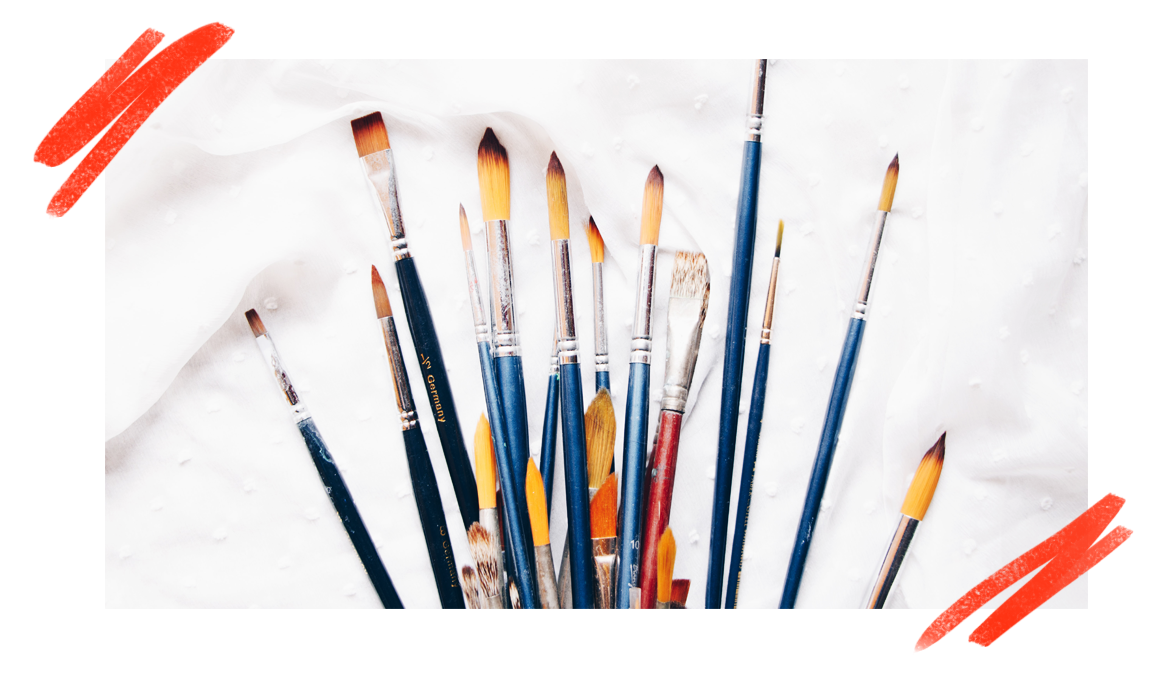
For a starter kit, five brushes cover everything:
- Flat #4 or #6 — backgrounds, large areas, straight edges
- Flat #2 — medium shapes and washes
- Round #4 — detail work, line work
- Filbert #4 — versatile blending, petals, soft edges
- Liner / script #0 or #1 — fine detail, signatures, small text
Synthetic bristles (nylon/taklon) are best for acrylic — hold up to vigorous cleaning. Avoid natural hair brushes; they get destroyed by water-based acrylic.
Palette
Options from cheapest to most serious:
- Disposable paper palette — $5–10 for 50 sheets, zero cleanup
- Plastic palette — $5–10, reusable, wash off dried acrylic with warm water
- Stay-wet palette — $15–25, keeps paint workable for days with a moist sponge under waxed paper
Beginners: paper palette. Intermediate: stay-wet palette extends open time for blending.
Two water cups
Use two separate water cups: one to clean brushes between colors, one clean for diluting paint. A muddy cleaning cup will contaminate the diluting cup and make your colors muddy.
Repurpose yogurt tubs or any plastic container. A rim for wiping brushes on the side is handy.
Optional extras
- Spray bottle — mist canvas to slow drying. $2 at dollar store.
- Palette knife — $2–5, essential for impasto and color mixing without loading brushes.
- Gesso — primer for raw surfaces. $10 per jar.
- Glazing medium / slow-dry medium — $10–15, extends open time.
- Clear acrylic varnish — $10–15 for protecting finished paintings.
- Drop cloth or plastic tablecloth — $3.
Total starter budget
Minimalist: $45. 32 paints ($25) + 10 canvas panels ($12) + 5 brushes ($8) = ready to paint.
Standard: $75. All of the above + palette knife + medium + spray bottle + varnish.
Bundle route: Chalkola's 32-paint + 15-canvas bundle ($33.95) or $39.95 version with 20 canvases gets you the paint + surface for under $40.
Frequently asked questions
Do I need expensive brushes for acrylic painting?
No. Synthetic (nylon/taklon) bristle brushes in the $3–8 range work perfectly for acrylics. Expensive sable or natural-hair brushes actually get damaged by water-based acrylic. Save your money for paint and canvas.
How many brushes do I really need?
Five is plenty: a flat, a smaller flat, a round, a filbert, and a liner. Intermediate painters often add a fan brush (for trees and hair) and a larger flat (for backgrounds). Most professional painters use 7–10 brushes total.
Should I buy canvas panels or stretched canvas?
Panels for beginners — rigid, cheap, store easily. Stretched canvas once you're painting pieces you want to frame or hang. A 9×12 canvas panel is ~$1.50; the same size pre-stretched canvas is ~$5.
What size canvas should I start with?
8×10 or 9×12 inches. Small enough to finish in one session, big enough to practice composition and detail. Most beginners who start with 16×20 or larger abandon pieces halfway through.
Do I need gesso or can I paint on raw canvas?
Pre-stretched canvas from craft stores is already gessoed. Paint direct. Raw canvas, wood, or paper needs 1–2 coats of gesso first (for acrylic paper, gesso is optional). Raw cotton canvas without gesso absorbs ink unevenly and the paint can't sit on the surface properly.
Tools for your next project
Chalkola favorites — ready to ship.


