


How to Clean a Glass Desktop Whiteboard (Step-by-Step Care Guide)
Daily dry-cloth care, weekly alcohol wipe, permanent-marker rescue, adhesive removal. Everything to keep your tempered-glass writing surface showroom-fresh for years.
Why even non-porous glass needs occasional cleaning
Glass desktop whiteboards don't ghost like melamine boards — but they do accumulate three types of residue over time: dried marker pigment that got smudged in, skin oils from touching the surface, and (occasionally) coffee splatter or food residue. Weekly light cleaning keeps the writing surface at its best.
Without cleaning, the symptoms you'd see over months:
- A faint grey haze in frequently-written areas where pigment dust accumulated.
- Smear marks where coffee or oil splashed and was rubbed in.
- Fingerprint smudges around the edges where you pick up the board.
- Reduced erase quality as new ink gets harder to wipe completely.
The good news: all of this comes off with the right method, and never permanently stains tempered glass.
Daily care: the dry-cloth routine
For day-to-day use, all you need is a dry microfiber cloth. After writing and erasing, a single pass with a dry cloth removes any lingering pigment dust. This takes 15 seconds and keeps the glass looking showroom-fresh.
- Erase with the provided felt eraser after each writing session.
- Once a day (or after longer sessions), wipe the surface with a dry microfiber cloth.
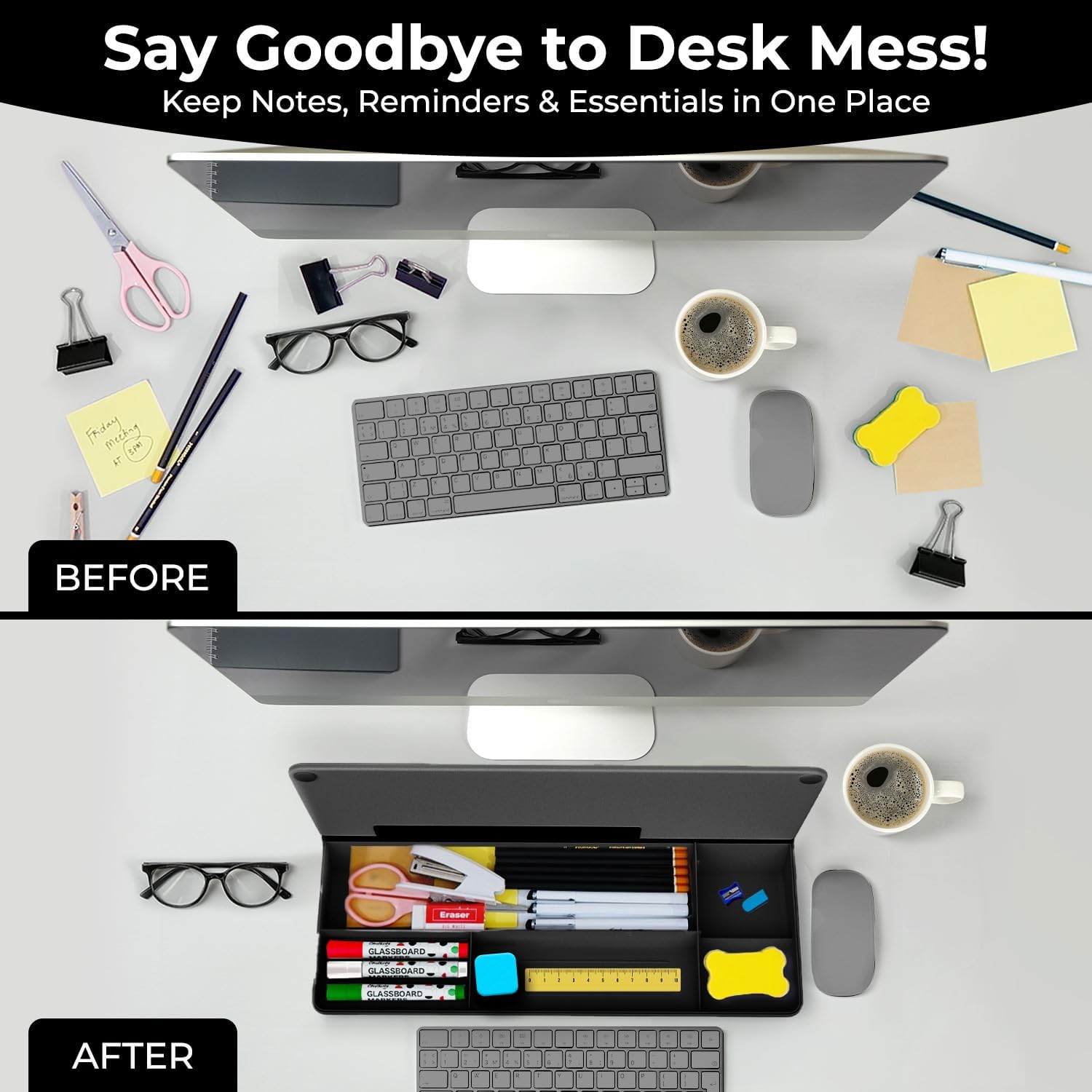
- Store the eraser in compartment #1 of the GlassDesk so it doesn't collect dust.
That's it. Dry-cloth care handles 95% of everyday cleaning needs.
Weekly: isopropyl alcohol wipe for deep clean
Once a week, do a quick alcohol wipe to remove skin oils, pigment haze, and accumulated residue. This is the routine that keeps the board looking new over years of use.
What you need:
- 70% or 91% isopropyl alcohol (rubbing alcohol from any drugstore)
- Microfiber cloth (not paper towels — they can leave lint)
Steps:
- Remove the eraser + markers from the compartments.
- Spray or dampen the microfiber with alcohol. Do NOT pour alcohol directly onto the board — it can pool under the glass edges.
- Wipe the entire glass surface in a circular motion.
- Do a final pass with a dry part of the cloth for a streak-free finish.
- Let it air-dry for 30 seconds before writing again (alcohol evaporates fast).
If you'd prefer a pre-mixed solution, our Chalkola Natural Chalkboard + Whiteboard Cleaner Spray is formulated for non-porous surfaces and includes a microfiber eraser + cleaner kit.
How to remove permanent marker from a glass whiteboard
The classic kid or co-worker mishap: a permanent Sharpie-style marker ended up on your GlassDesk. Good news — tempered glass is the easiest surface to rescue. Permanent ink comes off completely with the right solvent.
Method 1: Draw over it with dry erase marker (the magic trick).
- Take any dry-erase marker.
- Scribble directly OVER the permanent-marker text. Fully cover it.
- Immediately wipe with a dry cloth. Both the dry-erase ink AND the permanent ink come off together.
- If any residue remains, do a final alcohol wipe.
Why this works: Dry-erase ink contains a silicone release agent. When you write over permanent ink, the release agent dissolves the underlying permanent pigment and lets you wipe both off. Only works on non-porous surfaces like glass — don't try this on a painted whiteboard.
Method 2: Pure isopropyl alcohol. If Method 1 doesn't fully clear it, saturate a microfiber cloth with 91% alcohol and rub the spot. Comes off in 5–10 seconds. Finish with a dry pass.
How to remove tape, sticker, or label residue
If someone stuck a sticky note, masking tape, or a label on the glass and the adhesive left a mark:
- Peel off the sticker/tape slowly at a 45° angle. Most of the adhesive comes off with the paper.
- For the remaining sticky residue, apply 91% isopropyl alcohol or Goo Gone on a microfiber cloth.
- Let the solvent sit for 30 seconds, then wipe firmly in circles.
- Rinse with a damp-then-dry microfiber to remove any solvent haze.
For particularly stubborn adhesive (old label gum), repeat twice. The tempered glass surface is chemically inert — no solvent in normal cleaning use will damage it.
What NOT to use on a glass whiteboard
The tempered-glass surface is durable, but the frame, storage tray, and anti-slip pads underneath can be damaged by the wrong cleaner.
- No ammonia-based glass cleaners (Windex, etc.) on a regular basis. Occasional use is fine, but prolonged exposure can damage the plastic storage tray over time.
- No abrasive pads or rough sponges. Use only microfiber cloths. Scotch-Brite-style scrubbers can leave micro-scratches on the glass over years.
- No bleach-based cleaners. They can leave residue that smells and may discolour the anti-slip pads.
- No acetone / nail-polish remover. It will dissolve the anti-slip silicone pads underneath.
- Don't submerge in water. The storage tray is not waterproof — it's plastic with anti-slip pads. A damp cloth is fine; a soaking sink is not.
If in doubt: warm water + microfiber cloth handles most problems without any risk.
Long-term storage and moving tips
If you need to box up the GlassDesk for a move or office-refit:
- Clean fully first with the weekly-alcohol routine.
- Wrap the glass surface in bubble wrap or a soft cloth. The tempered glass is tough but the edges can chip if banged against something hard.
- Store flat, not on edge. Leaving it tilted against a wall puts lateral force on the edges over time.
- Keep markers + eraser in the original compartments. They're sized to hold those three markers snugly.
- Don't stack heavy items on top. The board can support a laptop short-term but not weeks of stacking.
Re-deploy: a quick alcohol wipe after unwrapping, and you're back to a showroom surface.
Frequently asked questions
How do I clean a glass whiteboard?
For daily use, wipe with a dry microfiber cloth after each session. For weekly deep cleaning, dampen a microfiber with 70–91% isopropyl alcohol and wipe the glass in circles, then do a dry pass for streak-free finish. Never pour alcohol directly onto the board — it can pool under the edges.
How do I remove permanent marker from a glass desktop whiteboard?
Scribble directly over the permanent ink with a dry-erase marker, then immediately wipe with a dry cloth. Both inks come off together. This works because dry-erase ink contains a silicone release agent that dissolves the permanent pigment. For stubborn residue, finish with a 91% isopropyl alcohol wipe.
What's the best cleaner for a glass whiteboard?
Isopropyl alcohol (70% or 91%) applied to a microfiber cloth. It's streak-free, evaporates cleanly, and handles skin oils and pigment haze. For a pre-mixed option, our Chalkola Natural Chalkboard + Whiteboard Cleaner Spray is formulated specifically for non-porous surfaces. Avoid ammonia-based glass cleaners for daily use.
Can I use Windex on a glass desktop whiteboard?
Occasional use is fine, but not as a daily cleaner. Ammonia-based glass cleaners can damage the plastic storage tray and anti-slip pads underneath over time. Isopropyl alcohol or warm water with a microfiber cloth is safer for regular use. Save Windex for rare deep cleans if you prefer it.
Why is my glass whiteboard still smudging after wiping?
Usually one of three causes: (1) the microfiber cloth itself is dirty and needs laundering, (2) skin oils from touching the surface haven't been removed — do an alcohol wipe, or (3) a cheap dry-erase marker left residue that needs alcohol to fully lift. Permanent ink always needs alcohol or the dry-erase overwrite trick.
How do I remove sticker residue from glass?
Peel the sticker at a 45° angle. For remaining adhesive, apply isopropyl alcohol or Goo Gone to a microfiber cloth, let it sit for 30 seconds, then wipe firmly in circles. Rinse with a damp-then-dry microfiber. Tempered glass is chemically inert — standard solvents won't damage the writing surface.
Does dry-erase ink stain glass over time?
No. Tempered glass is non-porous, so dry-erase pigment never absorbs into the surface. If you're seeing faint haze, it's surface residue that wipes off with an alcohol pass. This is fundamentally different from melamine or painted whiteboards, where ink does soak in and cause permanent ghosting.
Tools for your next project
Chalkola favorites — ready to ship.


