New snacks on sale now for a limited time! Use code NEW for 15% off.
Chalkola · Tutorial
How to Paint a Sky Using Acrylics
Updated Oct 2026
QUICK ANSWER
To make sky blue with acrylic paint, start with Titanium White as your base, add a small amount of Phthalo Blue (about 1 part blue to 4 parts white), then mix in a tiny touch of Mars Black to soften the brightness. Test on scrap canvas before applying — acrylic dries slightly darker than it appears wet.
EVERYTHING YOU NEED — 40 ACRYLIC COLORS + EASEL
Chalkola 40 Acrylic Paint Set for Adults with 24 Acrylic Pai
★★★★★4.7 · 1,262 Amazon ratings
$28.95 USD · free shipping
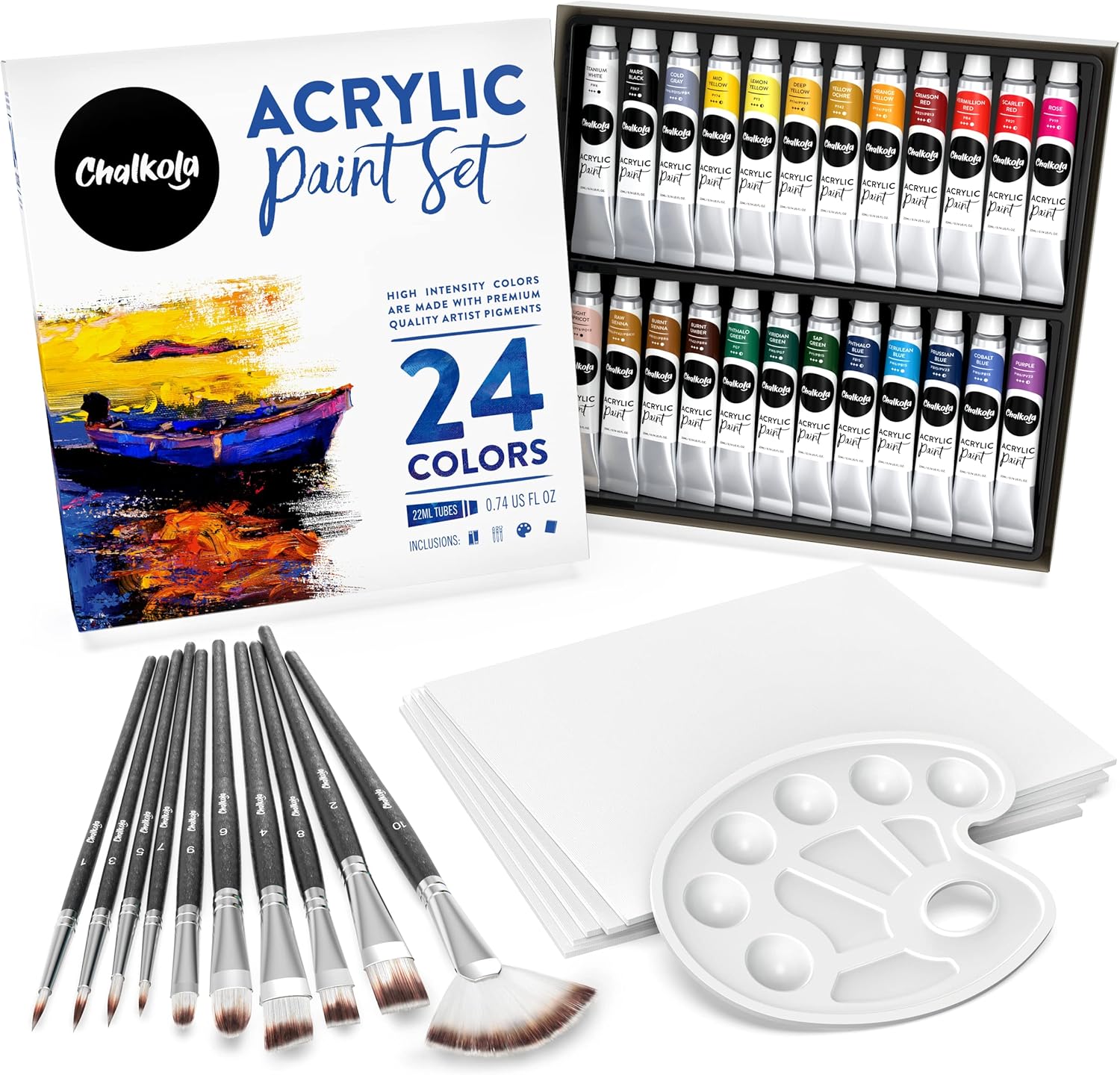
Complete set of painting supplies for artists — This is a professional acrylic paint set with 24 Acrylic paint tubes, 10 Brushes for painting, 1 Palette and 5 Canvas painting set, making it your one stop to get all your art paint
Artist quality premium paints — The acrylic paint kit in this canvas and paint set are richly pigmented and are easy to use for artists - professional artists, beginners
Art supplies — This paint and canvas set can be used as ceramic paint, clay paint, for rock painting, glass painting, plastic, paint for wooden crafts or as canvas paint for canvas painting kit.
Easy to use and store — These acrylic craft paint set are of high quality, easy to use and easy to store in the box they come in. Acrylic set has Individually labeled Aluminium tubes that allow you to easily squeeze out all the paint.
With its ever changing hues and shades, the sky has always been a fascinating subject, especially in art. It sets the mood for a landscape painting, it serves as an essential backdrop for any outdoor portrait, and it never fails to provide a stunning color palette that you just want to capture through painting or photography.
In this article, we’re sharing a tutorial video on how to paint a beautiful skyscape in less than one minute. By the end, you’ll know how to make your skies and clouds look realistic and dreamy at the same time. Once you’ve mastered this skill, you can play around with more colors, be more adventurous with blending and shading, and paint different cloud formations to capture the sky in all its dynamic glory.
Ready to paint your sky? Watch the short video below to unlock your skyscape-painting skill!
Steps:
Prepare your materials and if you can, use scratch paper or newspaper to cover the surface you’re working on.
On your palette, mix Titanium White and Phthalo Blue until you create a sky blue shade.
Once you achieve the sky blue shade of your choice, use it to paint the entire surface of your canvas board.
Layer the bottom part with Titanium White to achieve a gradient effect.
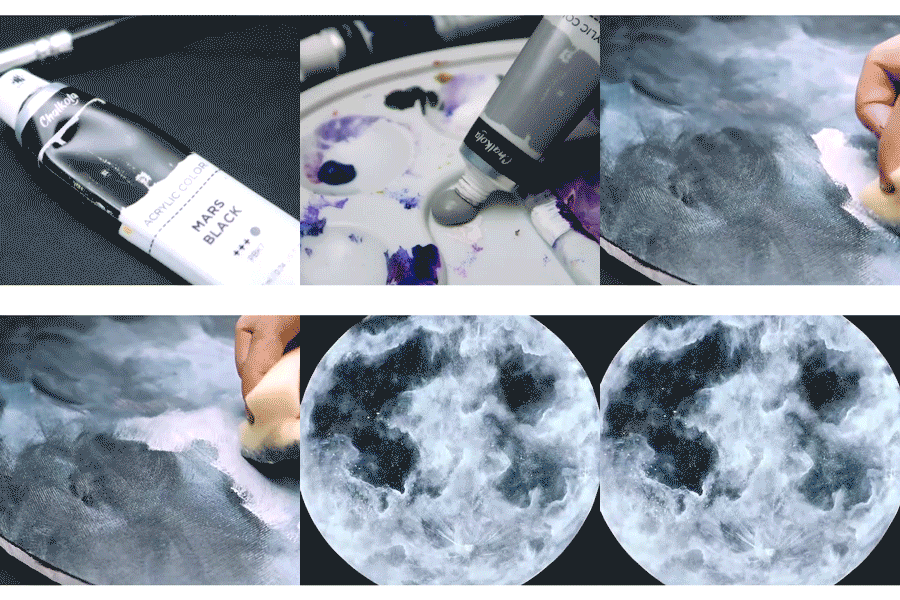
Add Mars Black to the sky blue mixture on your palette to create a bluish gray color. Use this to paint the outline of your clouds.
Add a bit of Titanium White on your mixture and paint the second layer of the clouds.
Use a small brush to blend the outer corners of the clouds.
Easy, right? Keep practicing and experimenting with different hues and combinations. The sky’s the limit when you’re being creative!
Sky Blue Color Mixing Ratios for Different Times of Day
The sky changes color throughout the day, and your mixing ratios should reflect these natural shifts:
Morning Sky (Pale Blue): 5 parts Titanium White + 1 part Phthalo Blue + 1 tiny drop Mars Black. This creates a soft, cool morning tone perfect for early light scenes.
Midday Sky (Bright Blue): 3 parts Titanium White + 1 part Phthalo Blue + optional tiny touch of black. This mixture produces the vibrant blue seen on clear afternoons.
Late Afternoon Sky (Warm Blue): 4 parts Titanium White + 1 part Phthalo Blue + 1 small touch Yellow Ochre. The yellow warms the blue, mimicking the golden hour glow.
Overcast Sky (Gray-Blue): 4 parts Titanium White + 1 part Phthalo Blue + 2 parts Mars Black. This creates the muted, neutral tones of cloudy weather.
Always mix more paint than you think you need. Running out mid-painting makes it nearly impossible to match the exact shade again. Test your mixtures on scrap canvas or palette paper before applying them to your final piece.
Common Mistakes When Mixing Sky Blue Acrylic Paint
Even experienced painters encounter challenges when mixing sky blue. Here are the most common pitfalls and how to avoid them:
Using too much blue: Phthalo Blue is highly concentrated. Start with a pea-sized amount and add more gradually. It's easier to darken a mix than to lighten one that's too intense.
Skipping the black: Many artists avoid black, but a tiny amount neutralizes the artificial brightness of straight blue-white mixtures, creating more natural-looking skies.
Not testing first: Acrylic paint dries slightly darker than it appears when wet. Always test your sky blue on scrap canvas and let it dry for a few minutes before committing to your painting.
Inconsistent mixing: Thoroughly blend your colors until no streaks remain. Partial mixing creates unintended marbling effects that look unprofessional in sky gradients.
Adding water too early: Mix your colors at full strength first, then thin with water if needed for smoother blending. Adding water during mixing dilutes pigment intensity and makes color matching difficult.
All-in-one Painting Set — Embrace creativity with 32 acrylic paints tubes (22ml), 10 Paint Brushes, 10 Art Canvas - [5x] 8x10 canvas board, [3x] 5x7 canvas, [2x] 4x4 small canvas, Palette, Knife, Sponge, 1x Wooden Easel
32 Artist Grade Paints — 32 premium paints for canvas painting that deliver vivid and vibrant pigment. Acrylic Ink tubes in this paint supplies set come in separate boxes for neat storage of art paints.
Acrylic Paint Set with Easel — This artist paint kits for adults comes with a multi-purpose paint easel that is light-weight, easy to use and makes it easier to paint various surfaces
10 Variety Canvas Panels — These paint canvases for painting are 100% Cotton, prepped and primed with 8 oz. of acid-free titanium gesso. Made of durable MDF to prevent your work from bending or warping
💰 Use code CHK10OFF at checkout · save 10% on this order
"This was a great paint set. I bought it for myself and a friend to paint ceramics."
— Kara C. · ★★★★★ · Verified Purchase, Amazon review, Jun 2026
What painters say about Chalkola acrylics
4.7★
Amazon rating
1,262
Amazon ratings
94%
rate it 4★ or 5★
82%
5★ ratings
★★★★★
"I got this for my wife and I to have Sip and Paint. The set is the perfect date night to have with your significant other or just friends and family. …"
Joseph C. · Verified Purchase · Amazon review, Apr 2026 Review of the Chalkola 56-Piece Acrylic Paint Set
★★★★★
"Love this i buy my kids other things for any gifts. They love to paint a few times a month we paint in the winters here in Alaska"
Wolverine · Verified Purchase · Amazon review, Mar 2026 Review of the Chalkola 20 Canvas Panels
★★★★★
"This is a great deal , it has everything needed to start painting as i am a beginner and this kit i am 300% pleased with."
David · Verified Purchase · Amazon review, Jan 2026 Review of the Chalkola 56-Piece Acrylic Paint Set
★★★★★
"These black canvases are so fun! It’s a nice change from the usual white backgrounds and gives artwork a whole new look. My kids and I really enjoyed experimenting with them, great quality and super creative."
MeganKingMama · Verified Purchase · Amazon review, Nov 2025 Review of the Chalkola 20 Canvas Panels
Ratings: Chalkola 40-Piece Acrylic Paint Set on Amazon.com, September 2026. Quotes are verified Amazon reviews, shown as written.
Start with a wet-on-wet blending technique. Apply a thin water layer to the canvas, then blend two to four sky tones (deep blue top, pale blue middle, warm orange or pink near horizon) using a wide flat brush in horizontal strokes. Blend edges while wet. Add clouds last.
Titanium white, cadmium yellow, cadmium orange, alizarin crimson or magenta, and ultramarine blue. A black is optional for the darkest cloud shadows. Mix the colours on a palette and blend on the canvas to avoid harsh transitions.
Load a dry flat or fan brush with white, wipe most of the paint off onto a rag, then dab the brush in loose uneven shapes. Soften edges with a clean dry brush. Add pale grey or lavender to the underside of each cloud for 3D form.
Usually because the paint dried before you blended it. Acrylic dries fast — work in smaller sections or add a retarder medium (1:4 ratio) to extend open time. Also thin paint with water before applying so it spreads more smoothly.
A 1.5–2 inch flat wash brush for the base gradient and a smaller round or filbert (size 6–10) for cloud shapes. Synthetic brushes hold water better than bristle for wet-on-wet work. One of each is enough to paint any sky.
Yes — sky painting is one of the most forgiving subjects because there are no hard edges or precise shapes. Start with monochromatic skies (one colour + white) for your first 2–3 paintings, then graduate to full sunset or storm-cloud palettes.
Start with Titanium White as your base, add a small amount of Phthalo Blue (roughly 1 part blue to 4 parts white), then mix in a tiny touch of Mars Black to soften the brightness. Adjust the ratios until you achieve your desired sky blue tone, testing on scrap canvas first.
Work quickly while the paint is still wet, using gentle horizontal strokes with a flat brush. Overlap each color zone by about half an inch, then blend the edges with a dry, soft brush in feathering motions. Keep your brush clean and work from light to dark for seamless transitions.
Overly bright sky blue usually means you added too much Phthalo Blue without enough white or black to soften it. Phthalo Blue is extremely potent, so start with tiny amounts and gradually build intensity. Adding a touch of black or complementary orange neutralizes brightness and creates natural-looking sky tones.
Yes, mix large batches in airtight containers and add a few drops of water to maintain consistency. However, skies benefit from slight color variation, so consider mixing multiple shades ranging from pale to mid-tone blue. Store mixed paint in sealed jars for up to two weeks, stirring before each use.
subscribe to receive special offers and new art ideas