


Are Oil Paint Markers Permanent?
Oil-based ink is waterproof, UV-resistant, and weather-safe after cure. Here's how permanent — and how to remove it when you want to.
Yes — with one nuance
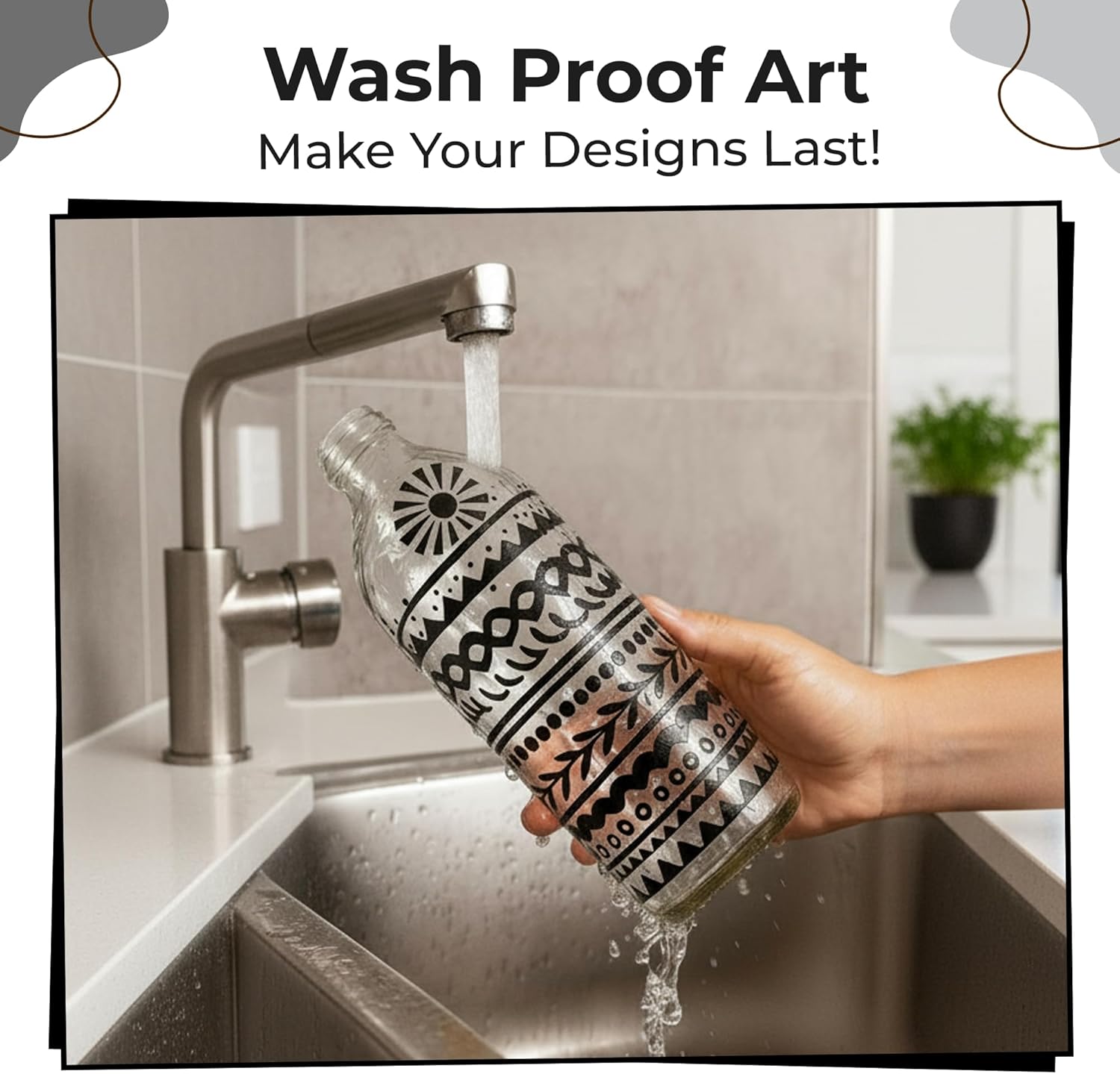
Yes, oil paint markers are permanent. After a 10-minute cure, the oil-based pigment is waterproof, UV-resistant, and weather-safe for 5+ years on outdoor surfaces. The nuance: on non-porous surfaces like glass and ceramic, the ink sits on top and can be deliberately removed with alcohol. On porous surfaces like wood and stone, the ink soaks into the material and cannot be removed.
Why oil paint markers are so durable
Three things make oil paint markers outlast water-based and alcohol-based markers:
- Oil carrier wets + bonds. Oil-based solvents chemically wet the surface (including oily metal), allowing pigment particles to form a mechanical and chemical bond. Water-based ink beads off greasy metal; oil bonds.
- Pigment, not dye. Pigment is made of insoluble color particles suspended in the carrier. Once the carrier evaporates, the pigment stays. Dye (used in standard alcohol-based permanent markers) is dissolved in the carrier and goes with it when the solvent evaporates, leaving a thin colored stain that fades quickly in UV.
- Cure = polymerization. Oil-based ink "cures" — the oil chemically cross-links into a tough, flexible polymer film that resists water, UV, abrasion, and most solvents.
How long does oil marker ink last?
| Setting | Expected life | Notes |
|---|---|---|
| Indoor art / scrapbooks | 10+ years | Archival-quality when stored out of direct sunlight |
| Glass + ceramic (indoor) | Indefinite | Hand-wash for longevity. Dishwasher = heat-set first. |
| Outdoor wood signs (unsealed) | 2–3 years | Add clear polyurethane for 10+ year durability |
| Outdoor wood signs (sealed) | 10+ years | Re-seal every 3–5 years for max life |
| Outdoor garden rocks (unsealed) | 2–3 years | UV direct sun shortens life. Seal with Mod Podge Outdoor. |
| Outdoor garden rocks (sealed) | 5–8 years | Freeze-thaw cycles remain biggest wear factor |
| Memorial stones / monuments | 5+ years | Seal for 10+ year durability |
| Tire lettering (driven daily) | 6 months to 2 years | Road grime + brake dust + tire flex shorten life |
| Auto body touch-up (sealed) | 5+ years | Clear-coat over ink for full weather protection |
| Fabric / canvas (after iron cure) | 50+ wash cycles | Wash inside-out, cold, no fabric softener |
How to remove oil paint marker (intentionally)
Yes, you can remove it — useful for seasonal decor, rental properties, and mistakes.
| Surface | Removal method |
|---|---|
| Glass | 70%+ isopropyl alcohol on cotton ball. For stubborn: acetone (nail polish remover). |
| Ceramic (not heat-set) | Alcohol or acetone. Wipe, rinse, repeat. |
| Ceramic (heat-set) | Cannot be removed without damaging glaze. Permanent. |
| Finished metal | Alcohol or acetone on soft cloth. Goo Gone for stubborn. |
| Raw wood | Cannot be removed — ink soaks into grain. Sand or paint over. |
| Stone + rock | Cannot be removed — absorbed by porous stone. |
| Plastic | Rubbing alcohol first. If no go, Goo Gone or Magic Eraser. |
| Skin | Before cure: soap + water. After cure: alcohol-based hand sanitizer or citrus cleaner. Wait 24 hours if needed. |
| Fabric | Fresh: dab with alcohol + blot, then wash. Cured + iron-set: cannot be removed. |
How waterproof is oil-based ink after cure?
Fully waterproof. After a 10-minute cure, oil paint marker ink resists:
- Rain — no rewetting of cured ink. Tested on outdoor metal + stone.
- Submersion — cured ink holds underwater indefinitely on ceramic, glass, and sealed wood.
- UV sunlight — holds color 5+ years on sealed outdoor surfaces. Unsealed loses saturation within 2–3 years of direct sun.
- Freeze-thaw — oil polymer is flexible enough to survive temperature cycling on stone and sealed wood.
- Light abrasion — survives light wear. Heavy abrasion (like bottom of a shoe) wears it off.
- Washing machine — iron-set fabric paint survives 50+ wash cycles inside-out on cold.
When oil paint marker ink fails
Even oil-based ink has limits. Know them so you can plan around them:
- Direct sunlight + unsealed porous surface. Garden rock in full sun for 3 years will fade without a clear outdoor sealer.
- Solvent exposure. Alcohol, acetone, mineral spirits, and Goo Gone all dissolve cured ink. If your project sits where these contact it, seal with polyurethane.
- Flex on non-flexible surface. If the substrate bends (like tire rubber or thin plastic), the ink film can crack on the bend. Normal for tire lettering — expect re-marks every 6–24 months.
- Heavy abrasion. Walking surfaces, shoe soles, high-contact tool handles will eventually wear marker off. Seal with clear polyurethane for tool handles.
- Food contact. Not food-safe. Never on mug rims, plate surfaces, or utensils.
- Before cure. If you handle within 5 minutes of application, fingerprints + smears will appear. Respect the 10-minute cure.
Markers that don’t fade outdoors & the best paint pens for outdoor signs
Outdoors, the enemies are UV, rain and abrasion. Water-based markers and standard felt ‘permanent’ pens fade; oil-based paint markers are the durable choice — waterproof after cure, UV- and weather-resistant, and they bond to wood, metal, plastic and stone. Seal for the longest life. Here’s how the options hold up outside:
| Marker type | Outdoor / fade resistance | Use it for |
|---|---|---|
| Oil-based paint markers | High — waterproof + UV-resistant after cure | Outdoor signs, planters, metal, rocks |
| Acrylic paint markers | Good — if sealed with clear coat | Sealed outdoor wood & canvas |
| Felt ‘permanent’ markers | Low — fade in sun | Indoor / short-term only |
| Water-based chalk markers | None — wipe off by design | Reusable signs, windows (not permanent) |
Best practice for outdoor signs: clean and de-grease the surface, apply oil-based paint marker in thin coats, let it cure fully, then finish with a UV-resistant clear sealer. Fine tip for detail, jumbo for big lettering.

Frequently asked questions
Are oil-based paint markers permanent?
Yes. Once cured (10 minutes), oil-based ink is waterproof, UV-resistant, and weather-safe for 5+ years. On porous surfaces like wood and stone it soaks in and cannot be removed. On non-porous surfaces like glass and ceramic it sits on top and can be wiped off with alcohol.
Do oil-based paint markers wash off?
Not with soap and water — they're designed to be waterproof. On non-porous surfaces you can intentionally remove cured ink with 70%+ alcohol or acetone. On porous surfaces (wood, stone, fabric without pretreatment) the ink cannot be washed off and is fully permanent after cure.
Are oil-based markers permanent on fabric?
Yes, after iron heat-setting. Apply the ink, cure 10 minutes, then iron on medium-high for 2 minutes with a pressing cloth over the art. After 72 hours, the fabric can be washed inside-out in cold water. The ink survives 50+ wash cycles when cared for properly.
Why is oil-based paint being phased out?
Some hardware-store oil-based wall and trim paints are being restricted due to volatile organic compounds (VOCs). Oil-based paint markers are different — they're pen-format art tools with much smaller ink volumes and meet ASTM D-4236 + EN-71 safety standards. They remain widely available for craft + industrial use.
What are the three rules of oil paint?
For traditional oil painting: fat over lean, thick over thin, and slow-drying over fast-drying. For oil paint markers: prime the nib before first stroke, clean the surface before applying, and respect the 10-minute cure window before handling. Follow those three and the ink performs as designed.
How do I remove oil-based paint marker from glass?
Wipe with 70%+ isopropyl alcohol on a cotton ball. For stubborn spots, use acetone (nail polish remover) on a soft cloth. Both methods fully remove cured ink without damaging the glass. This is why oil markers are great for seasonal decor on windows, mirrors, and wine glasses.
Will oil paint marker ink fade in the sun?
Unsealed oil-based ink on porous outdoor surfaces (rocks, raw wood) fades within 2–3 years of direct sunlight. Sealed ink (with clear polyurethane or outdoor Mod Podge) holds color 5+ years. On non-porous ceramics and glass, UV fading is negligible when kept indoors.
What markers don't fade outdoors?
Oil-based paint markers hold up outdoors far better than water-based markers or permanent felt markers: once cured they’re waterproof and resist UV, rain and abrasion, so colours stay true on outdoor signs, planters, rocks and metal. For the longest life, apply oil-based paint marker, let it cure fully, then add a UV-resistant clear sealer. Water-based chalk markers, by design, wipe off — they’re not for permanent outdoor use.
What are the best paint pens for outdoor signs?
For outdoor signs, use oil-based paint markers: they bond to wood, metal, plastic and stone, cure waterproof, and resist fading and weather. Use a fine tip for detail and a jumbo tip for large lettering, then seal for maximum longevity. Acrylic paint markers also work outdoors if you seal them; avoid water-based chalk markers and standard felt-tip ‘permanent’ markers for anything exposed to sun and rain.
How long does oil-based marker ink last outdoors?
Cured oil-based paint marker ink is designed to last for years on outdoor surfaces, especially when sealed with a UV-resistant clear coat. Real-world life depends on sun exposure, surface prep and whether it’s sealed — a de-greased surface plus a clear sealer gives the longest-lasting result. Reapply or re-seal high-exposure pieces periodically.