New snacks on sale now for a limited time! Use code NEW for 15% off.
Chalkola · Tutorial
Artist’s Corner: Drawing a Portrait Using the Numbers 1 Through 10
Updated Oct 2026
QUICK ANSWER
To draw using numbers 1-10, start with simple subjects where each digit shape becomes part of the drawing: "10" sideways becomes eyes, "3" rotated becomes whiskers or feathers, "6" becomes flower petals, "8" becomes butterfly wings. Chalk markers work best for this technique — the lines wipe off slate or chalkboard surfaces if your kid wants to start over, and the 1mm fine tip gives you full control over every number stroke. Pure number-shape geometry — ages 5+ finish a recognizable drawing in 10 minutes.
BEST FOR FINE NUMBER WORK — 30 PACK 1MM CHALK MARKERS
Extra Fine Tip Liquid Chalk Markers for Blackboard (30 Pack 1mm) Pastel + Neon Chalk Pens
★★★★★4.5 · 6,013 Amazon ratings
$29.94 USD · free shipping
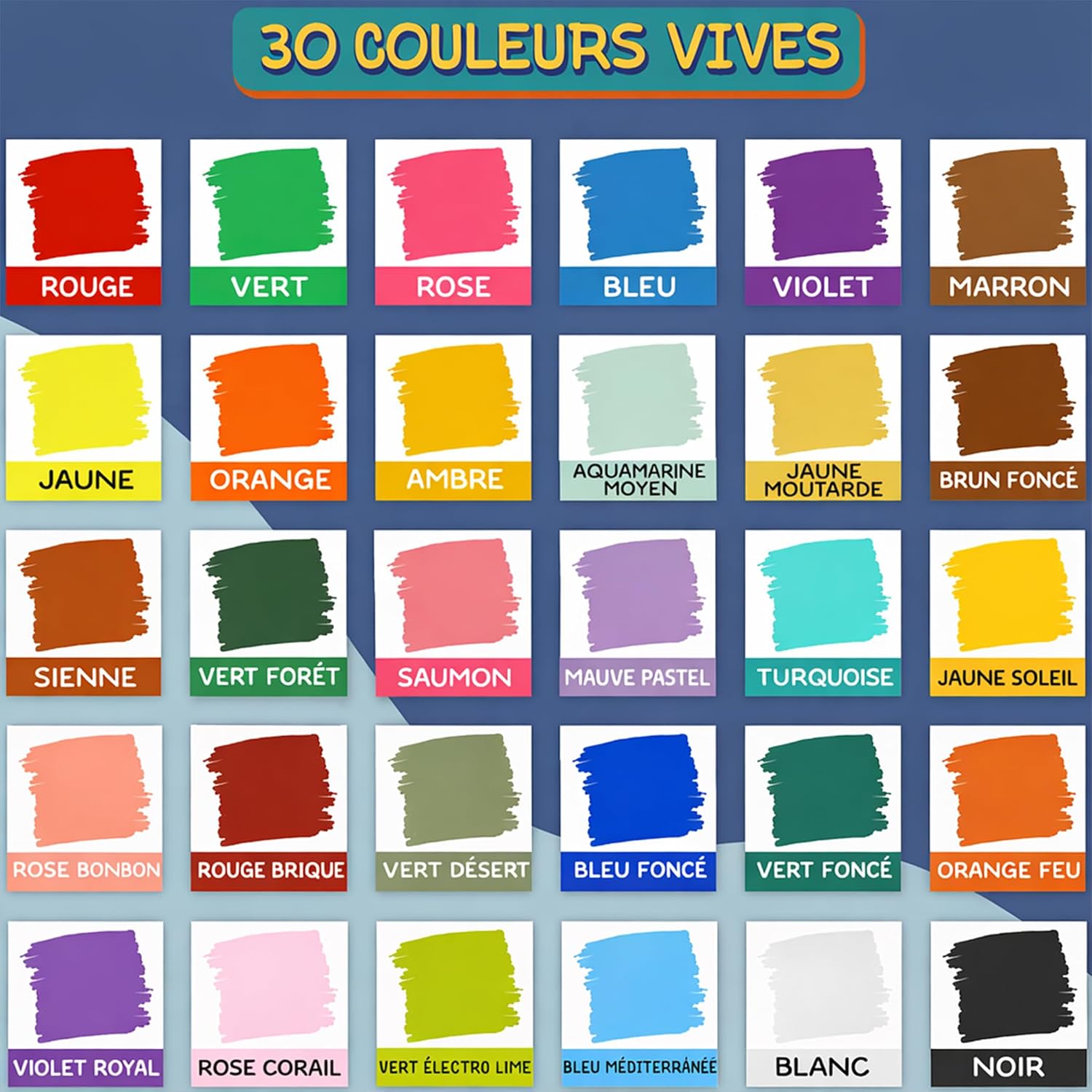
30 Colors — One pack containing all our Bright and Earth Chalk Markers. Use these Liquid chalk pens to decorate any Non-Porous surface including mirrors, shop storefront, whiteboard
The Ultimate Freedom Of Expression — Chalkola’s liquid chalk markers erasable are widely used to decorate wedding signs, milestone boards, menus, LED boards, contact paper, car mirrors, wine glasses and coffee mug.
Made For Everyone — Whether you're a Teacher, Mom, Student, Artist, Kid, Business, Office or Restaurant Owner our markers make creating beautiful messages effortless.
Comes Off Easy — The chalkboard ink pen is washable and will work on almost any surface! Will erase off non-porous surfaces; such as blackboard (wet erase), glass & mirrors (dry erase) and Permanent on porous surfaces
With their brilliant colors and smooth application, Chalkola markers are always exciting to use on different types of papers and surfaces. Here, we get to see how Mr. Yong Chen–a well-known illustrator and painter, children’s book author, and creator of the EnjoyingArt Learning Community–enjoyed trying out Chalkola Chalk Markers with his daughter, Lily, for the first time!
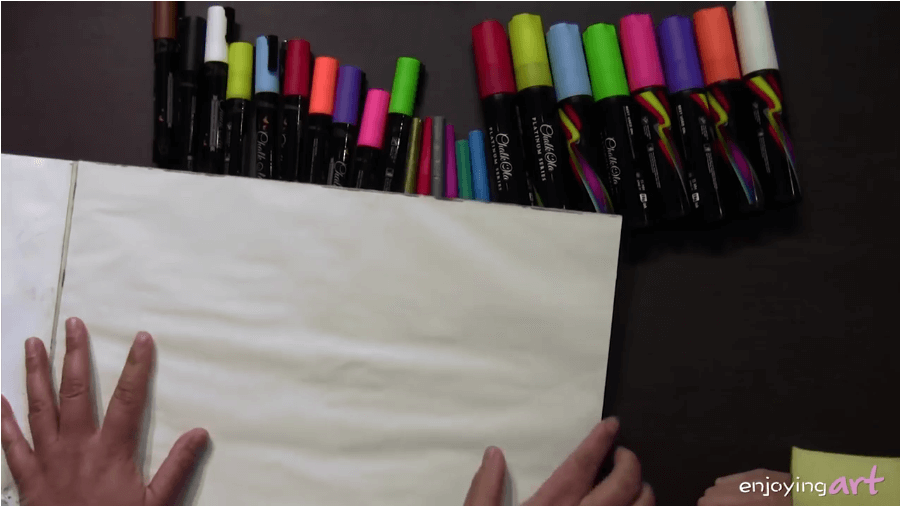
Lily lines up the markers so they can see all the vibrant colors.
Step 2
Mr. Chen prepares their sketchpad.
Step 3
Lily tells her dad that he needs to shake the marker before using it. They both like the sound of the ball mixing the ink inside the barrel of the marker as it gets shaken!
Step 4
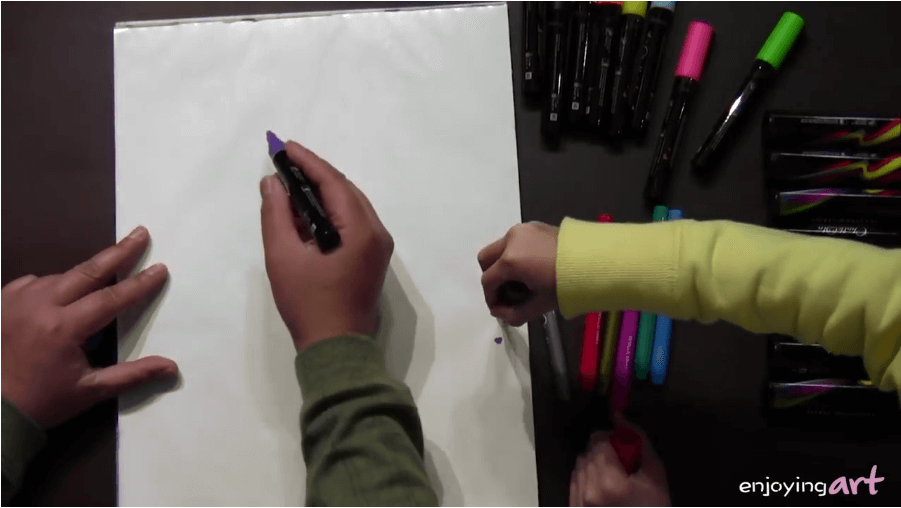
Mr. Chen is surprised that the purple marker has a white nib, but quickly realizes that the nib needs to be depressed several times to draw down the ink. He uses the side of the paper for this until he sees that the nib is saturated.
Step 5
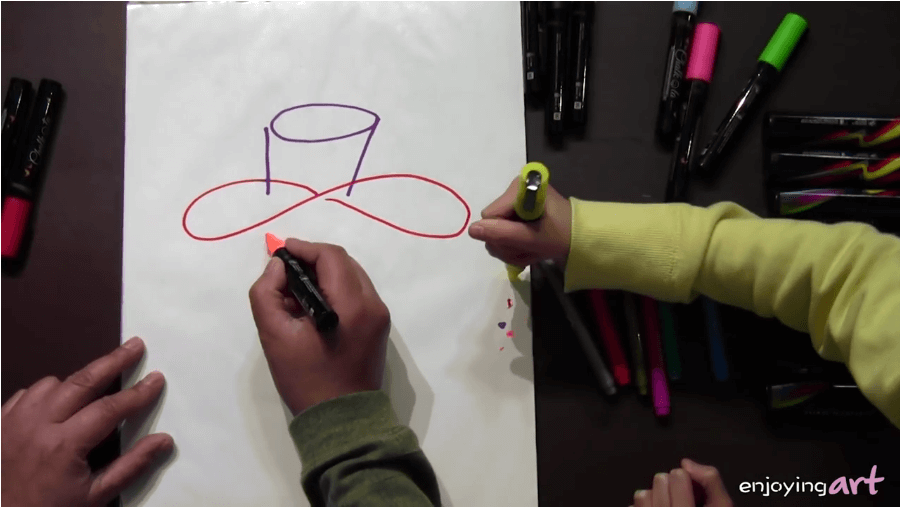
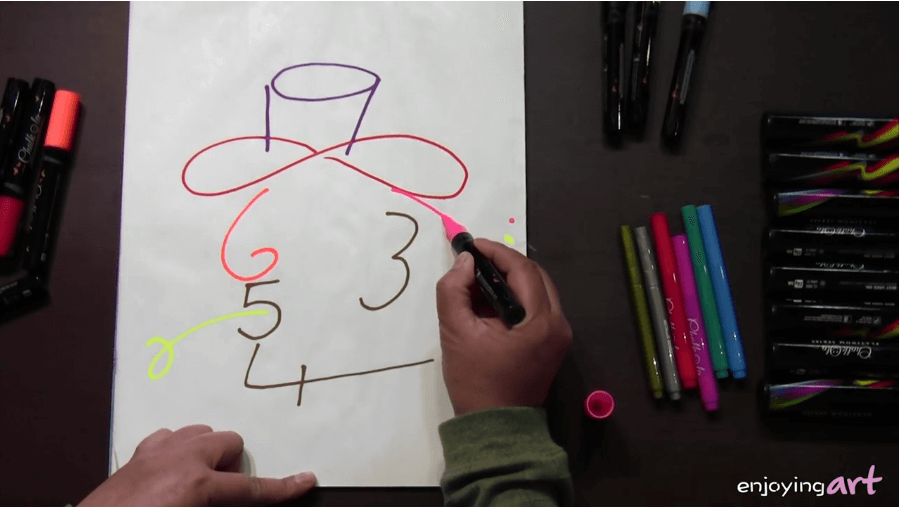
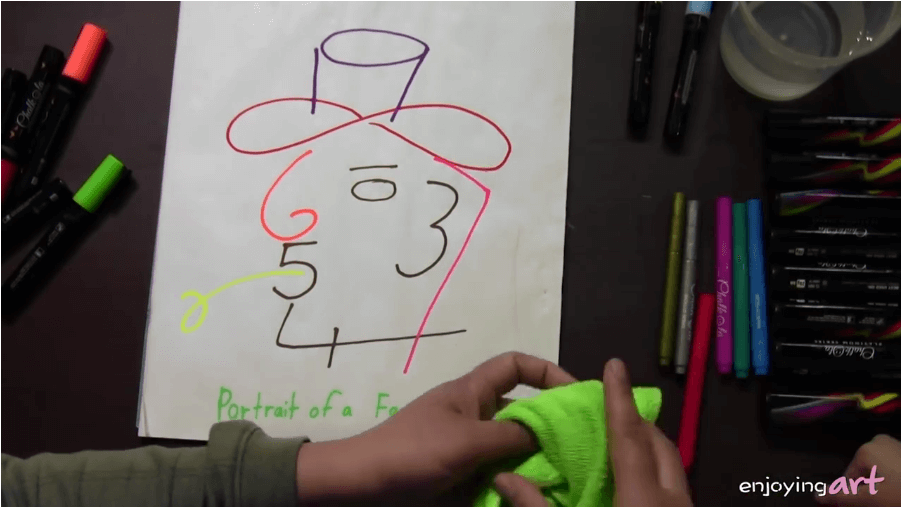
Lily watches as her dad begins to draw. Mr. Chen's father taught him to make the face of a man using the numbers 1 through 10, and now he’s showing this technique to his daughter. The numbers 1 and 9 are used for the top of the hat, and 8 forms the brim.
Step 6
Mr. Chen is using a different color marker for each number in the drawing. He has chosen pink to make the number 7, which will form the back of the head.
Step 7
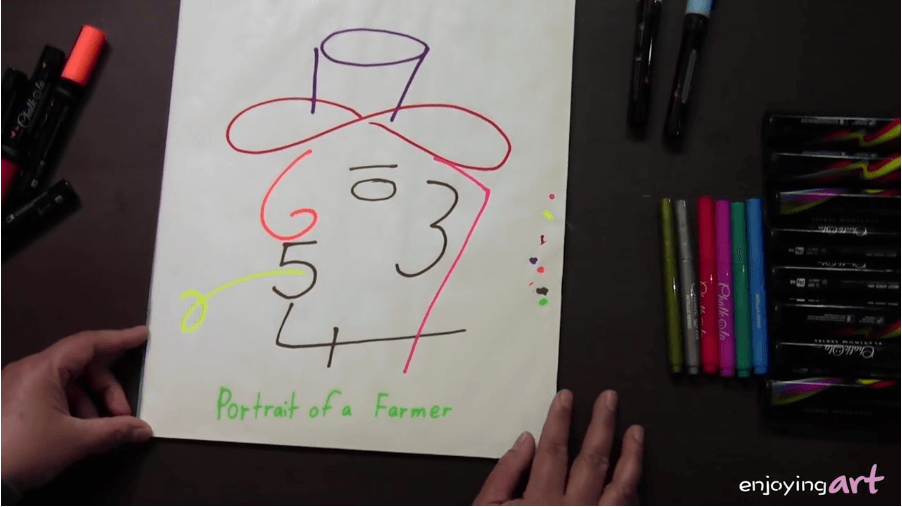
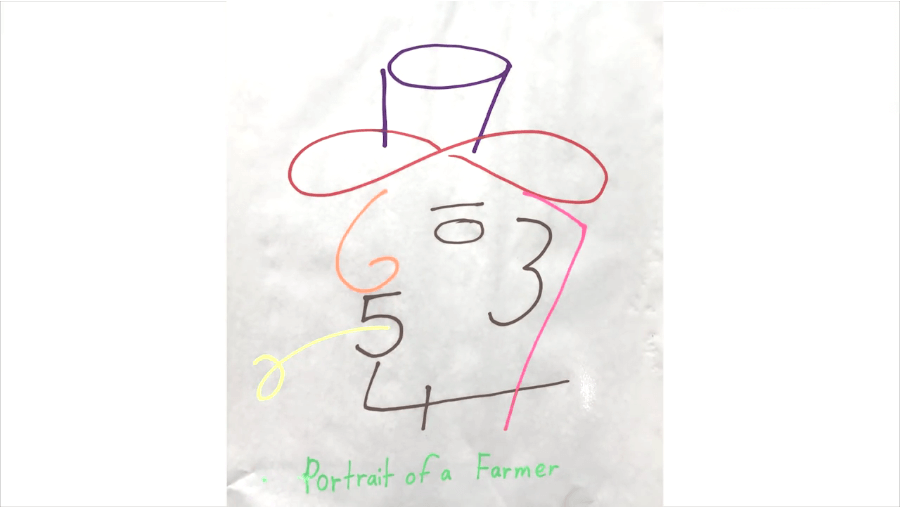
The drawing is finished and Lily labels it “Portrait of a Farmer.” She enjoyed watching the numbers form a recognizable figure and using the green chalk marker to spell the title of the picture.
Step 8
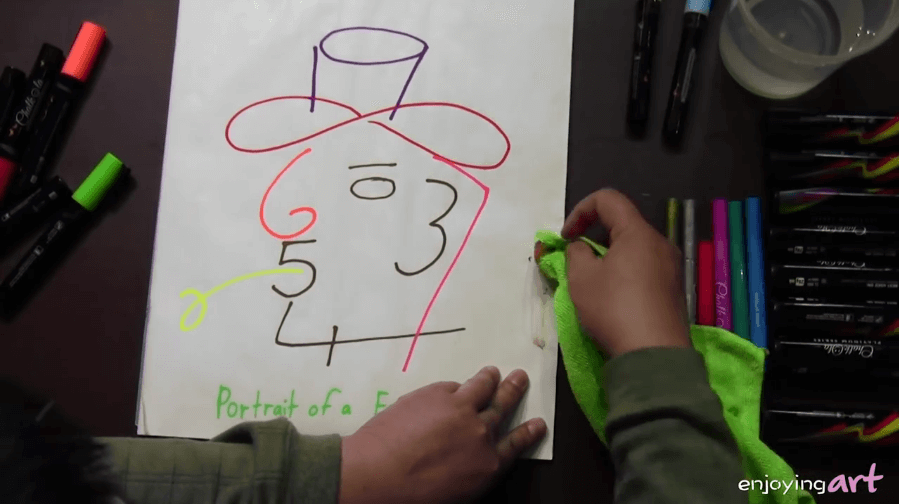
Mr. Chen dips a cloth in water and carefully wipes away the dots of color left by preparing the chalk markers.
Step 9
As you can see, the damp cloth has wiped away the dots drawn while preparing the chalk markers for use. Except for the indentations, you would never know there was color on that part of the page!
Step 10
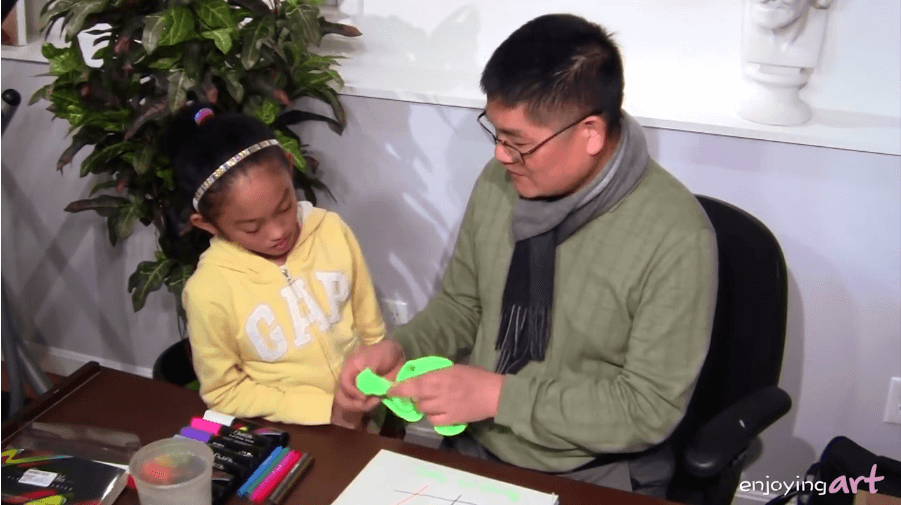
Lily and her father inspect the cloth that was used to wipe away the dots made by the chalk markers. They’re both very pleased to see that cleaning up is quick and easy when they use Chalkola Chalk Markers.
Step 11
If you didn’t know that numbers were used to make this portrait, you never would’ve guessed. What a clever trick! The vivid colors of the Chalkola Chalk Markers really make this portrait stand out.
Number-based drawing removes the most common barrier to art: the fear of the blank page. When you begin with numerals you've written thousands of times, your hand already knows the motions. This familiarity builds immediate confidence.
For children ages 5-12, the technique reinforces number recognition while developing fine motor skills and spatial awareness. Young artists see that curves, lines, and angles they already know can become eyes, noses, and hair with just a few additions.
For adult beginners or those returning to art after years away, number portraits offer a structured entry point. You're not guessing at proportions—the digits provide a built-in framework. The 1 becomes a nose bridge, the 3 curves into an ear, and the 8 naturally suggests the rounded forms of a face.
Art educators use this method because it teaches observation: students learn to see potential in unexpected places, a cornerstone skill for all creative work. The sequential nature (1, 2, 3...) also provides clear, followable steps that reduce overwhelm and keep momentum going.
Tips for Creating Your Best Number Art Drawing
Start light: Use pencil first to position your numbers, then trace over with markers once you're happy with the layout. This prevents permanent mistakes and lets you experiment freely.
Vary your scale: Not all numbers need to be the same size. A larger 7 makes a prominent nose, while smaller digits like 6 and 9 work perfectly for eyes. Play with proportion to add character.
Embrace imperfection: Slightly wonky numbers often create more personality than perfectly uniform digits. Let your hand flow naturally—organic variation adds charm to the final portrait.
Layer your colors: Chalk markers excel at layering. Start with base colors for skin tones, then add highlights with metallics or pastels. The opaque formula lets you build dimension without muddying your colors.
Add a background: Once your number portrait is complete, consider adding a simple colored background or pattern. This makes the face pop and turns your practice sketch into frameable art.
Try different number sequences: After mastering 1-10, experiment with other sets. Use a birthdate, a lucky number, or random digits. Each combination creates a unique facial structure and fresh creative challenge.
Beyond Faces: Other Art Using Numbers
Once you've completed a number portrait, the creative possibilities expand exponentially. The same principle—seeing shapes within numerals—applies to countless subjects.
Animals: The number 2 naturally becomes a swan's neck and head. An 8 stacked vertically forms a snowman or caterpillar. Try turning 5 into a seahorse or 6 into a snail shell. Challenge kids to create an entire zoo from digits 0-9.
Objects and scenes: Use 1 as a tree trunk, 3 as a butterfly wing, or 4 as a sailboat. Combine multiple numbers into larger compositions: a cityscape, a garden, or an underwater scene where each element begins as a numeral.
Letters and words: Apply the same transformational thinking to the alphabet. Turn letters into creatures or objects, then spell names or words where each character is also an illustration.
Abstract designs: Repeat a single number in patterns, rotate digits to create mandalas, or overlay numbers in different colors for modern, graphic compositions. Number art doesn't have to be representational to be striking.
The common thread is observation and imagination—skills that translate to all artistic endeavors. When you train your eye to see hidden potential in simple forms, you unlock creative solutions everywhere.
Number Art Gallery
10 Easy Drawings Using Numbers 1-10
Each drawing uses only digits 1-10 as the construction shapes. All done with Chalkola liquid chalk markers on a small slate chalkboard. Perfect for a kids' art-camp afternoon or a classroom 30-minute lesson.
IDEA 01
Smiling face portrait
Eyes from 10, nose from 3, ears from 7, mouth from 2.
IDEA 02
Sitting cat
Body from 2, eyes from two 0s, whiskers from 3s, ears from 6s.
IDEA 03
Six-petal daisy
Each petal shaped from digit 6, stem from 1, leaves from 3s.
IDEA 04
Butterfly
Symmetric wings from two mirrored 8s, body from 1, antennae from 7s.
IDEA 05
Flying bird
Body curve from 2, beak from 4, wing from 3, tail from 7s.
IDEA 06
Side-profile fish
Body from elongated 0, tail from 3, dorsal fin from 7, lips from small 3.
IDEA 07
Snowman
Three stacked 0s for body, 4 for carrot nose, 3 for smile, 1s for arms.
IDEA 08
Cottage house
Roof from mirrored 7s, walls from 4 outlines, window from 0, door from 1.
IDEA 09
Rocket ship
Cone from 4, body from elongated 0, portholes from 6s, fins from 7s.
IDEA 10
Forward-facing owl
Body from 8, eyes from two 0s, beak from 7, ear tufts from 2s.
30 Colors — One pack containing all our Bright and Earth Chalk Markers. Use these Liquid chalk pens to decorate any Non-Porous surface including mirrors, shop storefront, whiteboard
Ultimate Freedom Of Expression — Chalkola’s liquid chalk markers are widely used for chalk lettering, to decorate wedding signs, milestone boards, menus, LED boards, contact paper, car mirrors, wine glasses and coffee mugs
Made for Everyone — Whether you're a Teacher, Mom, Student, Artist, Kid, Business, Office or Restaurant Owner our color markers make creating beautiful messages effortless.
Comes Off Easy — The chalkboard ink pen is washable and will work on almost any surface! Will erase off non-porous surfaces; such as blackboard (wet erase), glass (dry erase) and Permanent on porous surfaces
💰 Use code CHK10OFF at checkout · save 10% on this order
What teachers + parents say about Chalkola
4.5★
Amazon rating
6,013
Amazon ratings
87%
rate it 4★ or 5★
74%
5★ ratings
★★★★★
"Great I love it, was worried that they’d be on the thicker side (the tips) but they’re nice and thin"
Emily H. · Verified Purchase · Amazon review, Nov 2024
★★★★★
"The BEST chalk markers! I used these on my acrylic refrigerator calendar after trying other brands and these are vibrant and perfect. Love all the choices of color and I am able to easily erase. If you are thinking of purchasing do it!"
Nicole · Verified Purchase · Amazon review, Feb 2025
★★★★★
"These chalk markers are great. The colors are vibrant and easy to see on my black board. I love having so many colors to choose from to decorate my wall calendar."
Suse · Verified Purchase · Amazon review, Oct 2025
★★★★★
"These write so smooth and release the perfect amount of paint. Colors are vibrant, Dries quickly and the size is great for writing apt dates and smaller things on calendars."
Jennifer H. · Verified Purchase · Amazon review, Nov 2025
Ratings: Chalkola 30 Extra Fine Liquid Chalk Markers on Amazon.com, September 2026. Quotes are verified Amazon reviews, shown as written.
Start by writing the numbers 1-10 in strategic positions on paper. Shape each numeral to suggest facial features—curve the 3 for an ear, elongate the 7 for a nose, and round the 6 and 9 for eyes. Connect the forms with simple outlines, then add shading and color using chalk markers or your preferred medium to complete the portrait.
Number art drawing transforms numerals into recognizable illustrations by using the shapes of numbers as structural foundations for drawings. Artists position digits 0-9 strategically, then add lines, curves, and shading to turn them into animals, faces, objects, or scenes. This creative technique teaches observation skills while making drawing accessible and fun for all ages.
Yes, number drawing is excellent for children because it combines math recognition with artistic expression. Kids gain confidence as familiar numerals guide their hand, reducing the intimidation of blank paper. The structured approach teaches proportion and spatial relationships while encouraging creativity, making it ideal for ages 5 and up, including reluctant artists who need a starting framework.
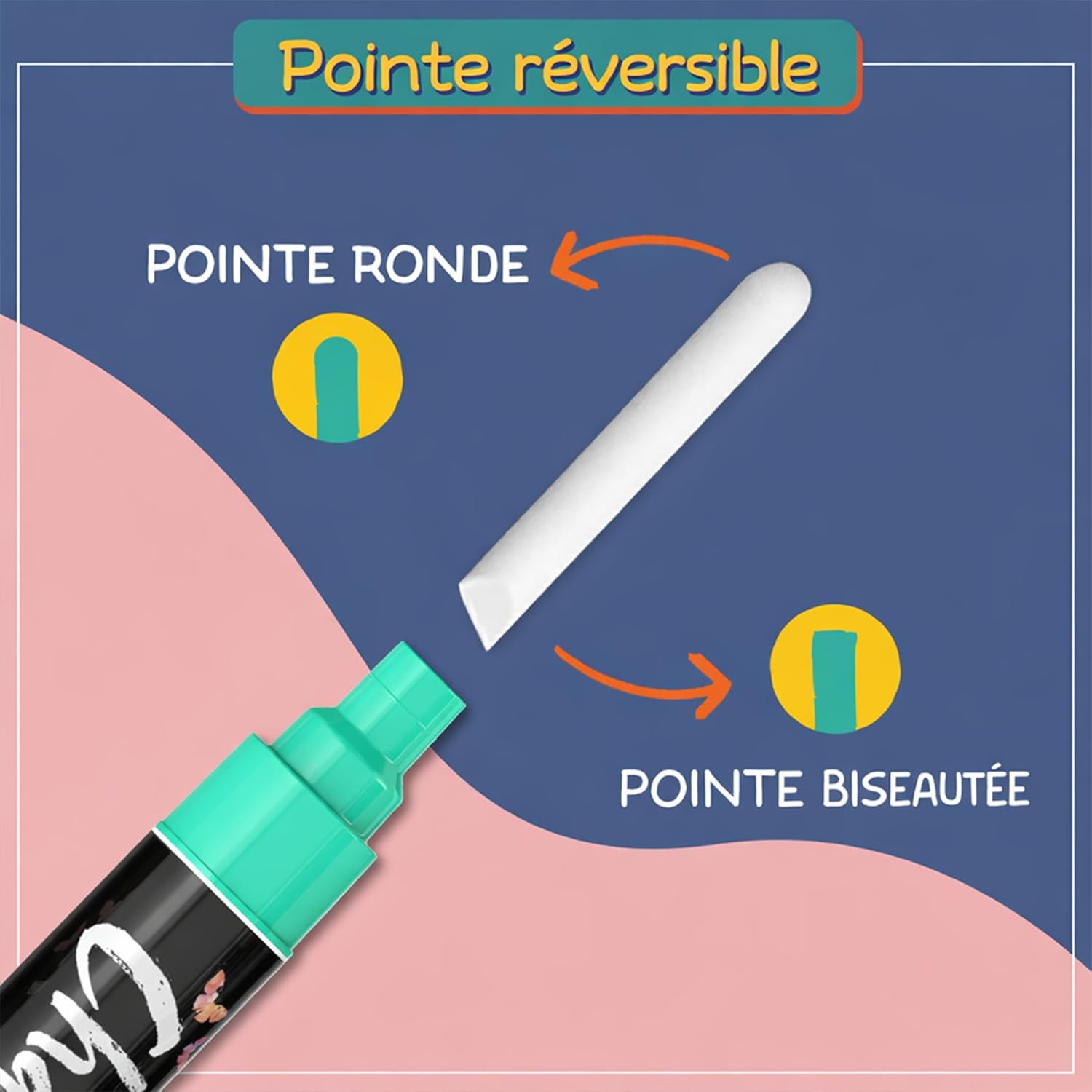
Any drawing medium works—pencils, crayons, markers, or pens. Chalk markers excel for this project because their opaque, vibrant pigments layer smoothly over pencil guides and create bold, gallery-worthy results on both light and dark paper. A sketchpad or mixed-media paper provides the best surface. Reversible-tip markers offer versatility for both thick outlines and fine facial details.
Absolutely. Every digit has unique curves and angles that suggest different shapes: 2 resembles a swan, 8 forms a snowman or butterfly, 5 creates a seahorse. Artists use single numbers, sequences like 1-10, birthdates, or addresses. The key is observing each numeral's inherent geometry, then enhancing those forms with additional lines to reveal hidden images within the number structure.
Number-based drawing methods have circulated in art education for decades as teaching tools to simplify complex subjects. The 1-10 face portrait approach gained popularity through art educators and online tutorials demonstrating how sequential numerals naturally map onto facial proportions. While no single inventor is credited, the technique reflects broader pedagogical strategies that use familiar symbols to demystify figure drawing.
subscribe to receive special offers and new art ideas






 Also read: