New snacks on sale now for a limited time! Use code NEW for 15% off.
The Chalkola Review · Watercolor Brush Pens · Tutorial
How to Create Gradient Art Using Watercolor Pens with Deepti Malik
Updated Oct 20267 min readBeginner-friendly
The brief
Gradient art techniques: Gradient art is a visual technique of gradually transitioning from one color hue to another, one shade to another, or one texture to another. This technique creates visual effects like depth, volume, atmosphere, and curved forms in artwork through smooth color blending.
THE WATERCOLOR BRUSH PENS DEEPTI USED FOR THESE GRADIENTS
Chalkola Watercolor Brush Pens for Lettering, Coloring, Calligraphy
★★★★★4.7 · 2,113 Amazon ratings
28 Vibrant Colors — These water color markers set offers rich colors & fine, flexible tips with 28 water pen, 2 blending markers (flat and round tip) and a 15 sheet drawing pad. They can be easily used by adults or as watercolor markers for kids.
Painting Pad — We’ve included a 15-sheet water color pad (5.8” x 8.3”) with our watercolor pens for artists. Its (200lb/300gsm) thickness and is made using acid-free, fine textured paper that’s great for use with our watercolor pens for adults
For Artists Of All Ages — Use these watercolor markers for adults coloring books, sketching or bullet journals. Chalkola water color markers pens have nylon brush tip. Perfect for beginners & as water brush pens for watercolor.
Safe and Non Toxic — Our water color pens set are non-toxic, odorless, water based and washable. This watercolor brush pens set makes a complete gift for any occasion.
We had a wonderful chat with Deepti Malik, a self-taught artist who finds inspiration in everything that surrounds her–nature, colors, patterns, layouts...and even grocery stores! We're thrilled to share the tutorial she created for us, as well as the story on her journey from being a hobbyist to a full-time artist. Enjoy getting to know our featured artist, Deepti, through her wonderful post below!
Today I’m here to share something very simple called “gradient,” but if you incorporate this into your art you can easily make some masterpieces.
If you look at the definition of gradient in a dictionary, this is what it says…“an increase or decrease in the magnitude of a property (e.g. temperature, pressure, or concentration) observed in passing from one point or moment to another.” So how does it relate to art? Gradient in art is a visual technique of gradually transitioning from one color hue to another, or from one shade to another, or one texture to another. Space, distance, atmosphere, volume, and curved or rounded forms are some of the visual effects created with gradient.
I think creating gradient using Chalkola Watercolor Brush Pens is easy. This set comes with many hues of the same color which allows for an easy transition.
Since it’s the holiday season, I decided to work with ornaments. I used a lid from a bottle to make my circles.
Check out the various ways to create gradient in the video below. The key is to pick the right colors to transition. You can always refer to a color wheel or even look for color palettes available online to get ideas.
I created a few watercolor Christmas cards with hand drawn ornaments using the same gradient techniques and also made a few gift tags.
On my gift tags, I created simple landscapes. The ways you can use gradient in your projects are unlimited.
Hope you enjoyed my projects and would give these a try–not just for the holidays but in any occasion or art project!
Get to know Deepti Malik Hello, friends! I’m so excited to be here with Chalkola. My name is Deepti Malik and I’m from India. After my stint in the real world of work, I decided to pursue my everlasting, never ending interest in art. Partly because I got married, was freer after moving to the US, and mostly because I was exposed to a lot of artsy things here. I’m a self-taught artist who’s still learning and experimenting with art. You can find the latest from me through my Instagram and blog site.
I find inspiration all around me, even in the toys of my 4-year-old. Something that started out as a hobby has taken me to the next level of admiration and appreciation...so much so that I’m now illustrating for two US-based paper crafting companies, STAMPlorations,with my own stamp line Dee's Artsy Impressions, and for Crafty Meraki. I also got the honor to teach an online class on Craftsy – Watercolor Cards Made Simple. I would say, not bad! If I can do it, everyone can.
I’ve worked with all the mediums from sketching to painting, but my happy place is handmade cards–they’re like tiny pieces of artwork that I can share with my loved ones. Also, with a toddler at home full time (because of COVID), I only have enough time to accomplish my little pieces of art. I’m inspired by all things around me, from nature to a grocery store, you’ll find inspiration everywhere. I also look for inspiration in things that catch your attention–colors, patterns, layout...and then I try to recreate them on my cards.
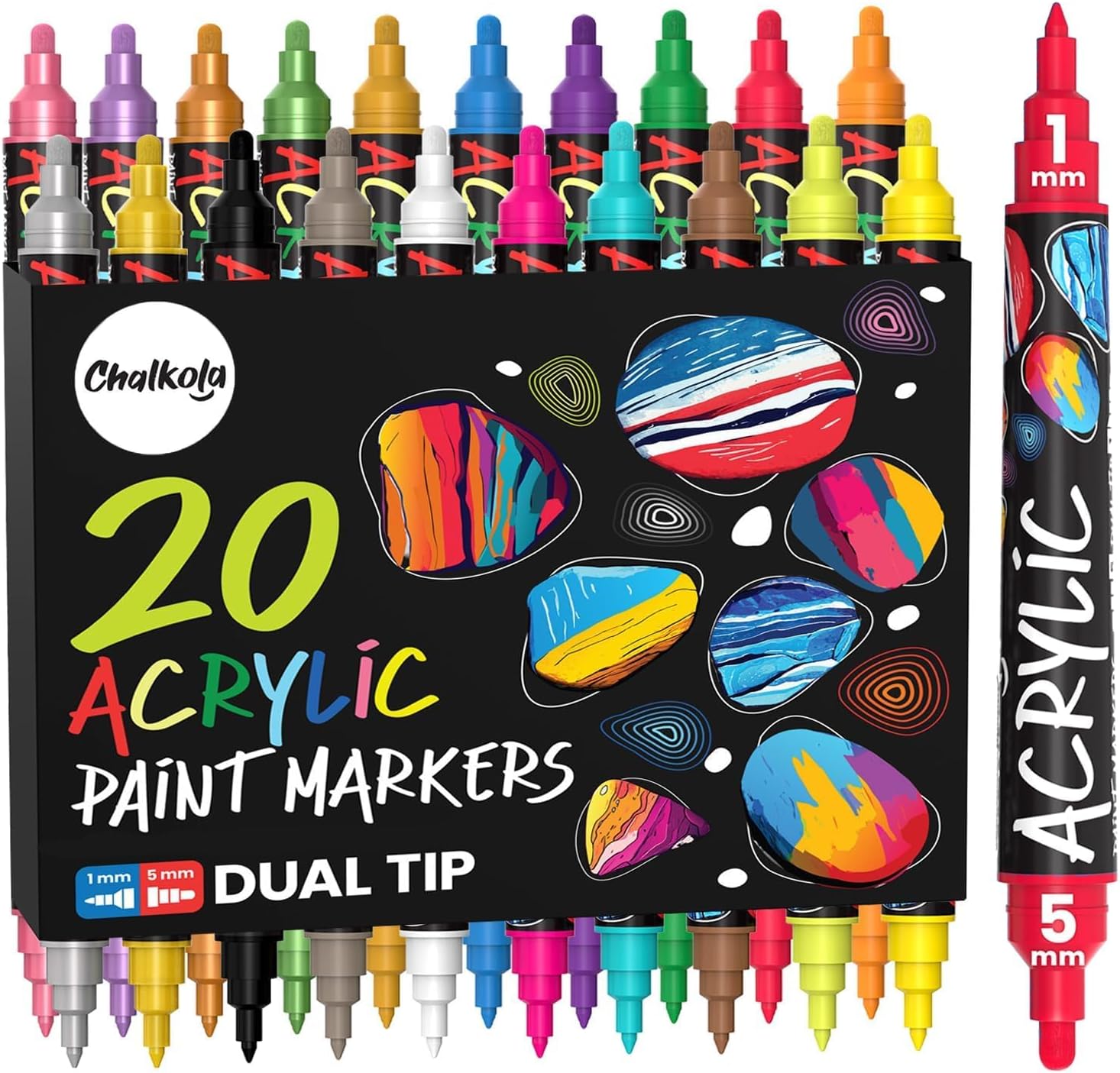
Chalkola products are amazing. I’ve worked with both Acrylic Paint Markers and Watercolor Brush Pens and I’d say they’re fabulous in their own ways. Acrylic Markers allow us to work on different surfaces and I love that they come with two unique tips. Watercolor Brush Pens are amazing because of the ease with which we can add a variety of colors into our design. The intensity of colors is awesome, too. You can even mix colors using these brush pens to make a completely different hue. Now I have to get my hands on the famous Chalk Markers!
I hope I was able to inspire you. Thank you so much for having me!
Before diving into gradient techniques, understanding basic color relationships helps you create more harmonious transitions. Analogous colors (neighbors on the color wheel) blend most naturally, creating smooth, pleasing gradients. For example, transitioning from yellow to orange to red produces a sunset-like effect because these colors share common pigments.
Complementary color gradients (opposite colors on the wheel) create more dramatic effects but require careful blending to avoid muddy middle tones. When working with watercolor brush pens, test your color combinations on scrap paper first. This lets you preview how pigments interact when wet and helps you plan the number of intermediate steps needed for smooth transitions.
Value gradients—transitioning from light to dark within a single color—add dimension without the complexity of multiple hues. Start with your lightest application and gradually build intensity by layering or adding more pigment. This technique works beautifully for creating shadows, volume, and three-dimensional effects in your artwork.
Common Gradient Mistakes and How to Avoid Them
One of the most common gradient mistakes is working too quickly or letting colors dry before blending. Watercolor gradients require wet-into-wet technique for seamless transitions. Keep a spray bottle nearby to rewet areas if they start drying, or work in smaller sections that you can complete while pigments remain workable.
Another frequent issue is using too much water, which dilutes pigments unevenly and creates unwanted blooms or backruns. Start with less water than you think you need—you can always add more. Use a paper towel to wick away excess moisture if pooling occurs.
Harsh lines between colors indicate insufficient blending at transition points. When this happens, revisit those areas with a clean, damp brush and gently work the edge where colors meet. Overlap your color zones slightly and blend while both sides are still wet for the smoothest results.
Finally, avoid overworking your gradients. Excessive brushing lifts pigment, damages paper texture, and creates muddy results. Plan your gradient, execute with confidence, and resist the urge to continuously adjust. Sometimes imperfect gradients add character and organic beauty to your finished piece.
LOVE WATERCOLOR CARDS? THE 36-COLOR WATERCOLOR PAINT SET
Chalkola Watercolor Paint Set for Adults & Professional Artists
★★★★★4.7 · 2,298 Amazon ratings
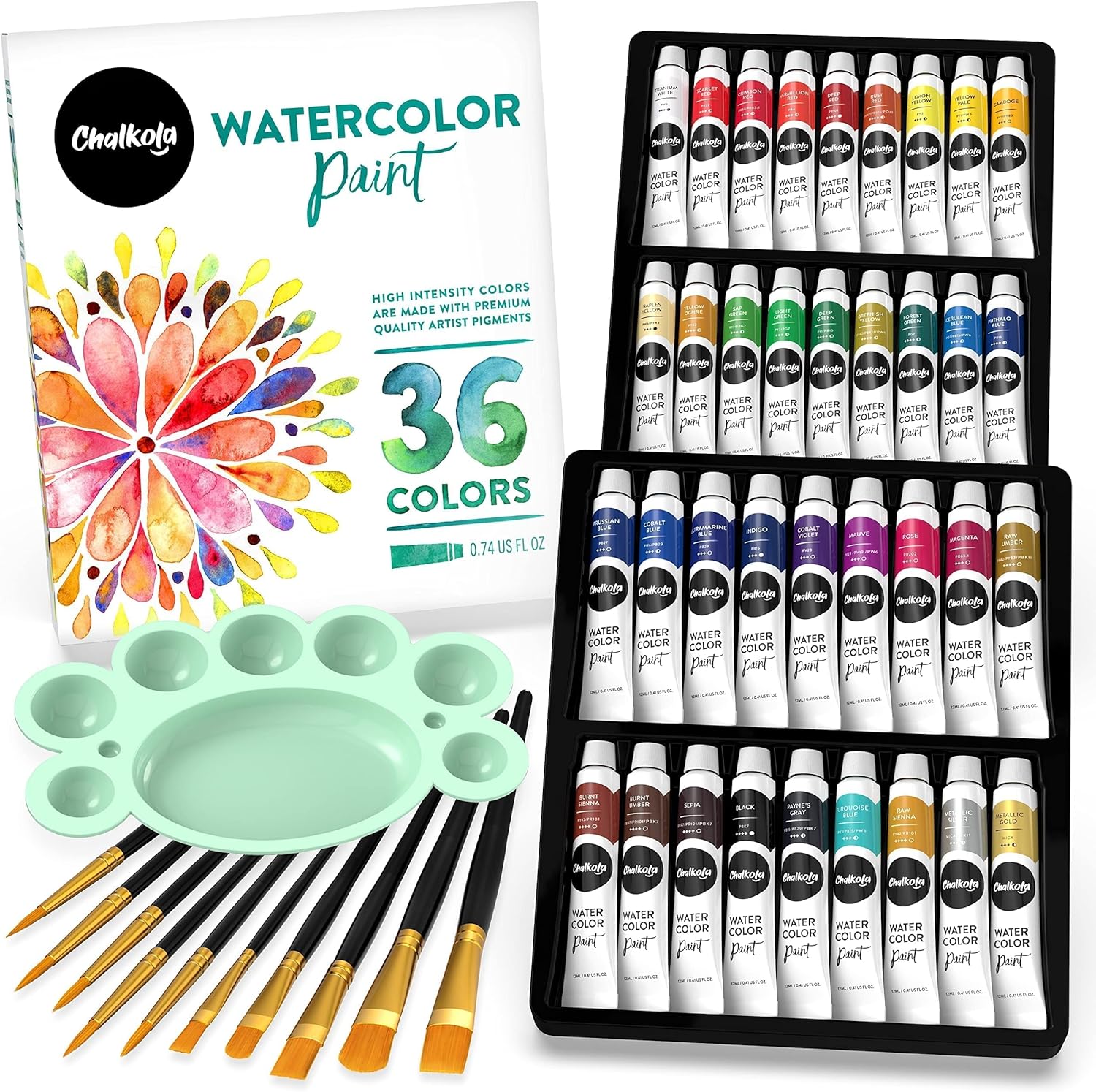
Watercolor Supplies — Your premium water coloring paint set comes with 36 water color tubes (incl. metallic watercolors) , 1 watercolor palette & 10 watercolor paint brushes.
Large Selection of High Quality Artist Grade Colors — Whether you’re new to watercolors painting or a seasoned artist, this is a great professional watercolor paint set and also great watercolors for adults.
Great for gifting — Keeping your water color paints organized. These acuarelas (paints) are perfect art supplies to add to your collection today! The perfect watercolors for artists
These water paint set are perfect watercolor paints for — adults & can be used to paint on canvas, watercolor pads & more
Gradient art is a visual technique of gradually transitioning from one color hue to another, one shade to another, or one texture to another. This technique creates visual effects like depth, volume, atmosphere, and curved forms in artwork through smooth color blending.
To create gradients with watercolor brush pens, apply color directly to watercolor paper, then use a water brush to blend colors together. Work while colors are still wet for seamless transitions. Start with lighter colors and gradually add darker hues, blending at the edges where colors meet.
The main gradient types include color-to-color (transitioning between different hues), light-to-dark (value gradients within one color), and texture gradients (gradually changing surface patterns). Each type creates different visual effects like space, distance, volume, and atmosphere in finished artwork.
Watercolor pens work best on watercolor paper designed to handle moisture. Regular paper may warp, pill, or tear when water is applied for blending. For optimal gradient results and color vibrancy, use cold-press or hot-press watercolor paper that can withstand wet blending techniques.
Essential supplies include watercolor brush pens in multiple hues, watercolor paper, a water brush or clean brush with water, and paper towels for blotting. Optional tools include masking tape to secure paper and a palette for testing color combinations before applying to your final artwork.
For fresh mistakes, blot excess water or pigment with a paper towel. Lift unwanted color using a damp brush on dry areas. If gradients appear harsh, rewet the area and blend again while wet. For dried mistakes, layer additional colors over problem areas or incorporate errors into your design.
subscribe to receive special offers and new art ideas